

Stainless Steel vs Aluminum Moka Pot for Flavor
Table of Contents
- How Material Shape Moka Pot Flavor
- Stainless Steel vs Aluminum Moka Pot: Side-by-Side Comparison
- Does Aluminum Affect the Taste of Moka Pot Coffee?
- Stovetop Espresso Maker Instructions for Best Flavor
- Induction Compatible Moka Pot: Why It Matters for Flavor
- How to Clean a Moka Pot (Without Damaging Flavor)
- Durability, Cost, and Long-Term Value
- Frequently Asked Questions
Last Updated: September 12, 2026
How Material Shape Moka Pot Flavor
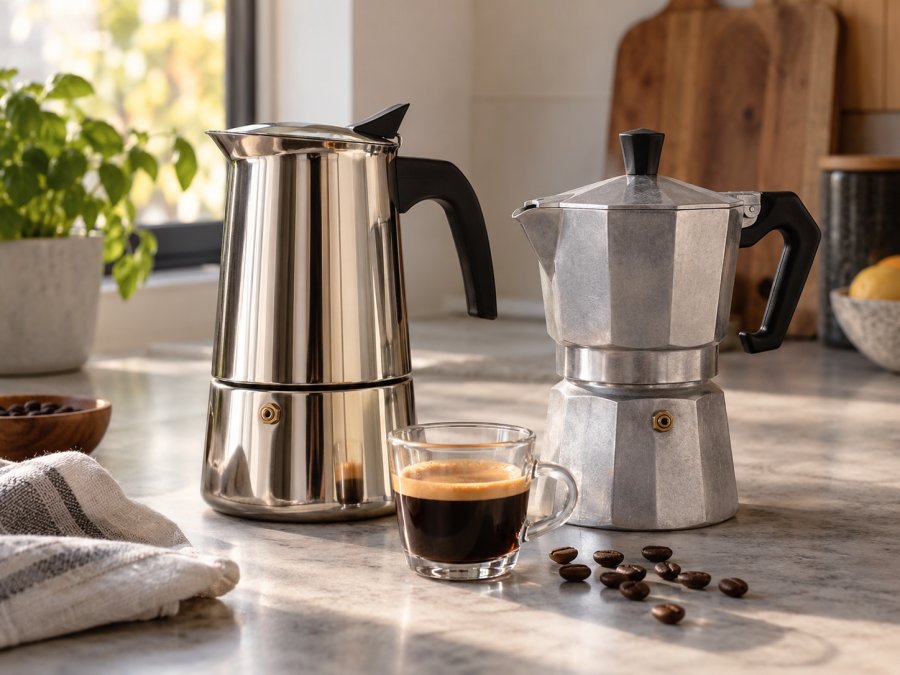
The stainless steel vs aluminum moka pot for flavor debate comes down to two physical properties: how each metal conducts heat and how it reacts with coffee. Stainless steel heats slowly but evenly and stays chemically inert, while aluminum heats fast but can interact with acidic coffee over time. That difference shapes what ends up in your cup more than most brewing variables.
At fiammaferro.com, our moka pots are built from 304 stainless steel. The metal you choose is an active participant in extraction.

Thermal Conductivity and Extraction Speed
Aluminum wins on raw thermal conductivity. It moves heat into the water column quickly, which shortens the time between "cold pot" and "first drip."
Stainless steel conducts heat more slowly, but it distributes that heat more evenly across the base and walls. That steadiness matters for extraction consistency: a pot that climbs in temperature gradually produces a more predictable flow through the coffee bed. Aluminum's rapid ramp can push water through too aggressively if you are not watching the flame.
Chemical Reactivity and Metallic Aftertaste
Stainless steel is non-reactive. It does not bond with the acids in coffee, which is why a well-made stainless pot tastes neutral brew after brew.
Aluminum is chemically reactive, especially against acidic solutions. That reactivity is the root of the metallic aftertaste some drinkers report. It is not imaginary, and it is not permanent in every case. It depends on the pot's surface condition, age, and how it has been cleaned.
Stainless Steel vs Aluminum Moka Pot: Side-by-Side Comparison
Here is the practical breakdown most buyers want before choosing.
Factor |
Stainless Steel (304) |
Aluminum |
|---|---|---|
Thermal conductivity |
~16 W/m·K |
~205 W/m·K |
Heat-up behavior |
Slower ramp, even base-to-wall spread |
Fast ramp, hot spots near flame contact |
Thermal mass |
Higher; holds temperature steadier |
Lower; responds quickly but swings faster |
Chemical reactivity |
Passive chromium-oxide layer, self-healing |
Reactive; relies on oxide layer and seasoning |
Metallic taste risk |
Minimal |
Higher if unseasoned or scrubbed bare |
Induction compatibility |
Yes, with a magnetic base |
No, without an adapter disc |
Durability |
Resists dents and corrosion |
Softer; dents, pits, and deforms |
Weight (6-cup) |
Roughly 1.5 to 2 lb |
Roughly 0.8 to 1.2 lb |
Cleaning |
Most are dishwasher safe |
Hand wash only, no abrasives |
Seasoning required |
No |
Yes, for best flavor |
Upfront cost |
Higher |
Lower |
What the Numbers Mean in the Cup
The conductivity gap is the headline. Aluminum moves heat into the water column roughly ten times faster than stainless, which is why an aluminum pot reaches first drip sooner on the same flame (engineeringtoolbox.com).
Stainless trades that speed for stability. Its higher thermal mass means the pot holds a steadier temperature once it is up to heat, so the water climbs through the coffee bed more gradually.
Cooktop Compatibility Decides It for Many Buyers
If you cook on induction, the decision is already made. Aluminum is not magnetic, so a bare aluminum moka pot will not heat on an induction surface without a separate adapter disc, which adds a layer of thermal lag and defeats much of aluminum's speed advantage (energy.gov). Stainless with a magnetic base works directly.
On gas, both materials perform well. Gas gives you the most granular flame control, which suits aluminum's fast ramp. On electric coils, stainless's even spread helps offset the coil's uneven perimeter heating.
Cost Over the Life of the Pot
Aluminum costs less at purchase and weighs less in hand. It also dents, pits, and deforms more easily, and its reactive surface demands careful handling for the life of the pot. A dented base can sit unevenly on the burner and create hot spots that worsen extraction.
Stainless costs more upfront but resists corrosion, holds its shape, and does not require seasoning or special cleaning. Over years of daily use, the higher upfront price usually works out to a lower cost per brew.
For induction owners, daily brewers, and anyone who wants one pot that lasts, stainless is a durable answer. For occasional brewers on gas who want the fastest possible heat-up and the lowest entry price, aluminum remains a reasonable choice.
Does Aluminum Affect the Taste of Moka Pot Coffee?
Yes, aluminum can affect taste, but the effect depends on the pot's condition and your water. A new or poorly maintained aluminum pot is more likely to leave a metallic note than one that has built up a proper patina through regular use.
The mechanism is straightforward. Coffee is mildly acidic. Aluminum surfaces oxidize, and that oxide layer interacts with the acids in the brew. Over time, a seasoned pot develops a stable, darker surface that shields the metal underneath. Skip that process, and the reaction stays active.
Oxidation and the Seasoning Process
Seasoning is the informal practice of brewing several throwaway batches in a new aluminum pot before drinking the coffee. The goal is to build a stable oxide layer and let coffee oils settle into the metal's pores.
Porosity is the key word here. Aluminum is more porous than stainless steel, which means it absorbs and holds coffee oils more readily. That can be an advantage once seasoned, adding body. It becomes a liability if the pot is scrubbed back to bare metal every week.
Water Chemistry and Metal Leaching
Water chemistry changes how much metal leaches into your brew. Hard water, high in dissolved minerals, tends to be less aggressive toward aluminum than soft or acidic water. Very soft water with low mineral content can pull more metal into solution.
This is the angle most guides skip. Leaching is not a fixed property of aluminum; it is a function of the water, the brew's acidity, and the surface condition of the pot. Stainless steel sidesteps the question entirely because it does not readily give up ions into an acidic solution.
Stovetop Espresso Maker Instructions for Best Flavor
Great flavor from a moka pot follows a repeatable sequence. The steps below work whether you brew in stainless or aluminum.
- Fill the base with fresh water just below the pressure valve. Preheating the water is optional but improves control.
- Add coffee to the filter basket without tamping. Level it with your finger.
- Use a medium-fine grind, finer than drip but coarser than true espresso.
- Screw the top on firmly, then place the pot on medium heat.
- Remove it from heat the moment the flow turns pale and sputtering starts.
Grind consistency drives extraction yield. A burr grinder produces even particles; a blade grinder produces a mix of dust and boulders that extracts unevenly. The Titanium+ Precision Manual Coffee Grinder from fiammaferro.com uses titanium-coated burrs and precise adjustment to keep that grind consistent.
Induction Compatible Moka Pot: Why It Matters for Flavor
An induction compatible moka pot is one built with a magnetic stainless base that responds to induction cooktops. This matters because induction delivers heat directly to the pot's base with almost no lag or hot spots, giving you tighter control over the brewing temperature curve.
Gas and electric coils heat unevenly around the perimeter, which can push water through one side of the coffee bed faster than the other. Induction heats the full base at once.
fiammaferro.com's Linea Suprema Stovetop Espresso Maker is engineered from 304 stainless steel with an induction-ready base, no aluminum, and no plastic. For induction owners, that combination removes the need for an adapter disc and keeps the heat transfer predictable.
How to Clean a Moka Pot (Without Damaging Flavor)
Cleaning a moka pot is where many owners accidentally undo their flavor gains. The rule is simple: remove residue buildup without stripping the surfaces that protect the metal.
For stainless steel, warm water, mild dish soap, and a soft sponge are enough. Most stainless pots are dishwasher safe, but hand washing preserves the finish longer. For aluminum, skip the dishwasher entirely and never use abrasives.
- Rinse the funnel, filter basket, and gasket after every brew.
- Dry all parts fully before reassembly to prevent corrosion.
- Replace the silicone gasket when it hardens or cracks; a worn gasket causes leaks and uneven pressure.
- Descale periodically if you live in a hard-water area.
The gasket and pressure valve are two parts that can affect flavor. A leaking gasket drops the pressure inside the pot, which can weaken extraction. Replacement silicone gaskets are inexpensive and can restore performance.
Durability, Cost, and Long-Term Value
Aluminum moka pots cost less upfront and weigh less in hand. They also dent, pit, and deform more easily, and their reactive surface demands careful handling for the life of the pot.
Stainless steel costs more at purchase but resists corrosion, holds its shape, and does not require seasoning or special cleaning. Over years of daily use, the higher upfront price usually works out to a lower cost per brew.
U.S. Department of Agriculture food safety guidance notes that cookware material and surface condition affect how food and drink interact with metal, which is why non-reactive, food-grade surfaces are the safer long-term choice for acidic beverages like coffee.
For buyers who want one pot that lasts and brews consistently, stainless is a durable answer. fiammaferro.com's Espresso Ritual Bundle pairs the 12-cup stainless stovetop espresso maker with the Titanium+ grinder, covering both the brewer and the grind in one setup.

Choosing between stainless steel and aluminum for your moka pot is a decision about how much control you want over flavor. Aluminum is faster and cheaper; stainless is inert, induction-friendly, and built to last. For anyone brewing daily on an induction cooktop or seeking a cleaner, more consistent cup, the stainless route can help reduce variables that cause metallic aftertaste and uneven extraction. Explore the fiammaferro.com Linea Suprema stainless steel stovetop espresso maker, with its 304 stainless construction, induction-ready base, and included brew and care guides, and start brewing richer, cleaner coffee with confidence.
Frequently Asked Questions
Does aluminum affect the taste of moka pot coffee?
Aluminum can react with acidic coffee compounds, potentially leaving a metallic aftertaste, especially if the pot is new or not properly seasoned. Over time, a patina forms that reduces reactivity. Stainless steel is non-reactive, so it won't alter the flavor profile. If you taste metal, try seasoning your aluminum pot or switching to stainless steel for a cleaner cup.
Is stainless steel better than aluminum for stovetop espresso makers?
Stainless steel offers better corrosion resistance, is dishwasher safe (though hand wash is preferred), and won't react with coffee acids. Aluminum heats faster and is lighter, but can dent and may impart flavor if unseasoned. For flavor purity and durability, stainless steel is a good long-term choice.
How does material conductivity affect moka pot extraction?
Aluminum conducts heat quickly and evenly, bringing water to a boil fast. Stainless steel has lower thermal conductivity but higher heat retention, providing a more stable brewing temperature.
Can I use an induction compatible moka pot on a gas stove?
Yes, an induction compatible moka pot works on gas stoves as well. The base is designed to work with induction, but it also conducts heat on gas or electric. Just ensure the pot sits flat and use a low to medium flame to avoid damaging the handle or gasket.