

How to Descale a Moka Pot Safely
Table of Contents
- Why Descaling Your Moka Pot Matters
- Best Natural Descaling Solutions for Coffee Makers
- Step-by-Step Descaling Process
- How to Clean Moka Pot Coffee Oils
- Moka Pot Maintenance Tips for Long-Term Performance
- What to Avoid When Descaling
- Identifying Mineral Buildup vs. Coffee Oil Stains
- Frequently Asked Questions
Last Updated: September 2, 2026
Why Descaling Your Moka Pot Matters
A moka pot that brews rich, bold coffee one day can produce weak, bitter shots within weeks if mineral deposits and coffee oils accumulate inside. How to descale a moka pot safely is the difference between a tool that performs beautifully for decades and one that deteriorates silently until the seal fails or water channels clog.
Hard water leaves mineral deposits on lower chamber walls and threaded gaps. Coffee oils oxidize and harden on the filter plate and coffee stem. These residues restrict water flow, damage the silicone gasket, and cause metallic tastes. At Fiamma & Ferro, we engineered our Linea Suprema moka pot from 304 stainless steel specifically because it resists corrosion better than aluminum alternatives, but even premium stainless steel needs regular descaling to perform at its best.

This guide walks you through safe, non-toxic descaling techniques using natural remedies, step-by-step disassembly, and maintenance practices that keep your moka pot brewing exceptional coffee for years.
Best Natural Descaling Solutions for Coffee Makers
You have three proven natural options, each working through a different mechanism.
White Vinegar and Water Solution
White vinegar is the most accessible descaling agent. The acetic acid dissolves mineral deposits without harsh chemicals, making it safe for food-contact surfaces and silicone gaskets.
Mix equal parts white vinegar and water, typically one cup of each for a 12-cup moka pot. This concentration breaks down mineral buildup without damaging stainless steel or gasket material. The vinegar smell is temporary and rinses away completely.
Vinegar works more slowly than citric acid on heavy deposits. For light maintenance descaling, it's perfect. For thick white scale buildup, you may need to soak longer or repeat the process.
Citric Acid Method
Citric acid is the most effective natural descaling solution for removing stubborn mineral deposits. It's more potent than vinegar, works faster, and leaves no aftertaste if rinsed properly.
Dissolve one tablespoon of citric acid powder in two cups of warm water (the FDA). This creates a solution strong enough to tackle heavy mineral buildup without being corrosive to stainless steel or silicone. Citric acid is food-safe and widely available at grocery stores or online.
Citric acid works in 15-20 minutes rather than hours, making it the better choice for quarterly deep cleaning (peer-reviewed research). It also doesn't leave a smell.
Baking Soda for Stubborn Residue
Baking soda works best for coffee oil residue rather than mineral deposits. It's mildly abrasive when mixed into a paste, making it ideal for scrubbing the filter plate and coffee stem without scratching stainless steel.
Mix three parts baking soda with one part water to form a thick paste. Apply it directly to oily or stained surfaces, let it sit for 10 minutes, then scrub gently with a soft cloth. For mineral deposits, combine baking soda with white vinegar for a gentle fizzing action that loosens scale.
Step-by-Step Descaling Process
Disassembly and Initial Inspection
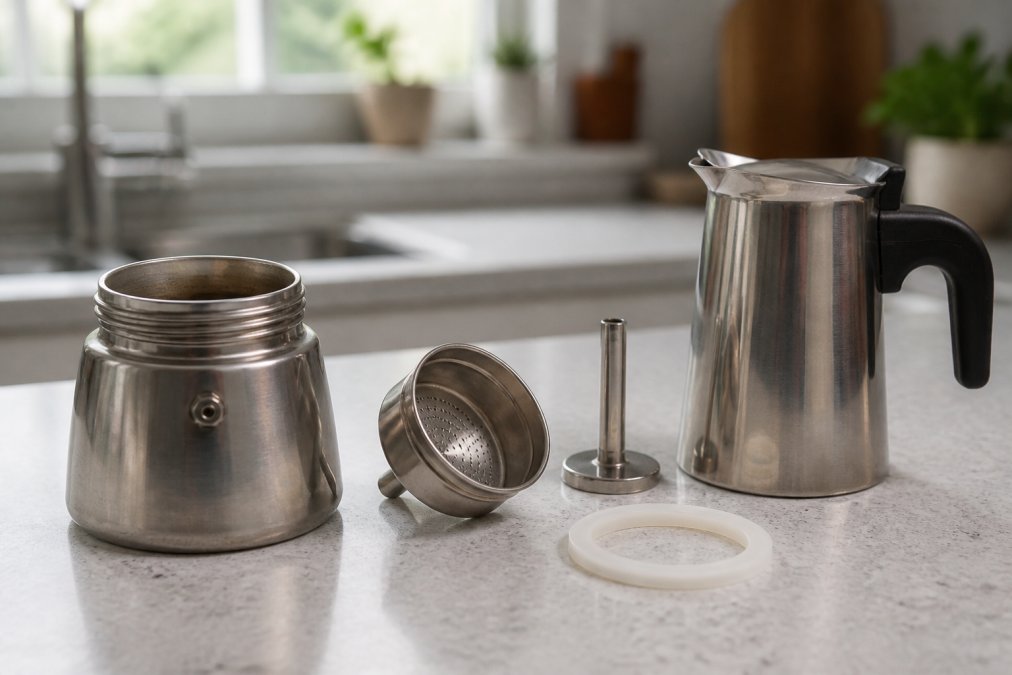
Take apart your moka pot completely. Unscrew the lower chamber from the middle section, remove the filter plate and coffee stem, and lift out the silicone gasket. Inspect each component under good light.

Look for white, chalky deposits on the lower chamber walls and threaded areas, these are mineral buildup. Check the filter plate and coffee stem for brown or black crusty patches, that's oxidized coffee oil. The silicone gasket should be flexible and free of cracks. If the gasket feels brittle or has visible damage, replace it. Fiamma & Ferro offers OEM silicone gasket replacements specifically engineered for the Linea Suprema to ensure a perfect seal.
Soaking the Lower Chamber
Fill the lower chamber with your chosen descaling solution. The liquid should cover all interior surfaces, including threaded areas where mineral deposits hide.
For light mineral buildup, soak for 30-45 minutes. For heavy deposits, soak for 2-4 hours or overnight. Citric acid works faster, so 30-45 minutes is usually sufficient. While soaking, gently agitate the chamber every 15 minutes by tilting and rotating it. After soaking, scrub the interior walls and threaded areas with a soft cloth or soft-bristled brush.
Do not use abrasive sponges or steel wool on stainless steel, they create micro-scratches that promote oxidation.
Cleaning the Filter Plate and Coffee Stem
Soak the filter plate and coffee stem in your descaling solution for 20-30 minutes. After soaking, make a baking soda paste and scrub these components with a soft cloth. Pay special attention to the small holes in the filter plate, coffee particles and oil can block these and restrict water flow.
Rinse thoroughly under running water. Hold the filter plate up to light and look through the holes to confirm they're clear.
Proper Drying and Reassembly
Dry all components completely with a soft cloth. Moisture left inside promotes oxidation, especially in threaded gaps.
Leave the moka pot disassembled for 30 minutes to air-dry fully before reassembling. When reassembling, apply a thin layer of food-grade silicone grease to the gasket if you have it on hand, this extends gasket life and improves the seal. Hand-tighten only; over-tightening can damage the gasket.
How to Clean Moka Pot Coffee Oils
Coffee oils are distinct from mineral buildup and require a different approach. Over time, oils oxidize and harden, creating a sticky, bitter residue that affects flavor.
Address oils early. After each use, rinse the moka pot with hot water immediately while the oils are still warm and fluid. Disassemble the pot and rinse each component individually.
For existing hardened oil buildup, the baking soda paste method is most effective. Apply it to oily surfaces and let it sit for 10-15 minutes. For stubborn oil residue inside the lower chamber, soak in white vinegar and water for 1-2 hours, then scrub gently with a soft cloth.
Moka Pot Maintenance Tips for Long-Term Performance
Daily Cleaning vs. Deep Cleaning
Daily cleaning is simple: disassemble the pot while warm, rinse each component under hot water, and dry immediately. This removes fresh residue before it hardens.
Deep cleaning happens quarterly or when you notice mineral buildup or oil staining. This is when you use descaling solutions and soak components for extended periods. Homes with hard water need deep cleaning every 6-8 weeks. Homes with soft water can often go 3-4 months.
Caring for the Silicone Gasket
The silicone gasket is the most vulnerable component. After each use, rinse it under hot water and dry thoroughly. Never leave it wet inside the moka pot.
Inspect the gasket monthly for cracks, hardening, or loss of flexibility. A healthy gasket should feel supple and return to its original shape when pinched. If it feels brittle or cracks appear, replace it.
Store the gasket separately from the moka pot if you won't be using it for more than a week. This prevents permanent deformation. Never soak the gasket in hot descaling solution for more than 30 minutes (the FDA).
Fiamma & Ferro's replacement gasket sets are engineered to OEM specifications, ensuring a perfect seal and consistent pressure for optimal brewing.
Preventing Oxidation and Corrosion
Stainless steel resists corrosion better than aluminum, but it's not immune. Oxidation appears as light surface discoloration or faint pitting.
To prevent oxidation: dry the moka pot completely after each use, store it in a dry location, and avoid leaving water sitting inside. If you notice early oxidation, address it immediately with a vinegar and water soak. Hard water accelerates oxidation because mineral deposits trap moisture. If oxidation becomes recurring, consider using filtered or distilled water.
What to Avoid When Descaling
Never use chlorine bleach, harsh chemical descalers, or abrasive scrubbers. Bleach can pit stainless steel and degrade the silicone gasket. Harsh commercial descalers often contain phosphoric acid, which is too strong for moka pots.
Don't soak the entire assembled moka pot in descaling solution. The solution can seep into threaded joints and trap moisture, promoting corrosion. Always disassemble before descaling.
Avoid steel wool, abrasive sponges, or scrub pads, they create micro-scratches that become sites for oxidation. Use only soft cloths or soft-bristled brushes.
Never use extremely hot water for descaling. Warm water, around 120-130°F, is sufficient and safer for all components. Don't neglect the threaded gaps where deposits hide, use a soft-bristled toothbrush to work descaling solution into these areas.
Identifying Mineral Buildup vs. Coffee Oil Stains
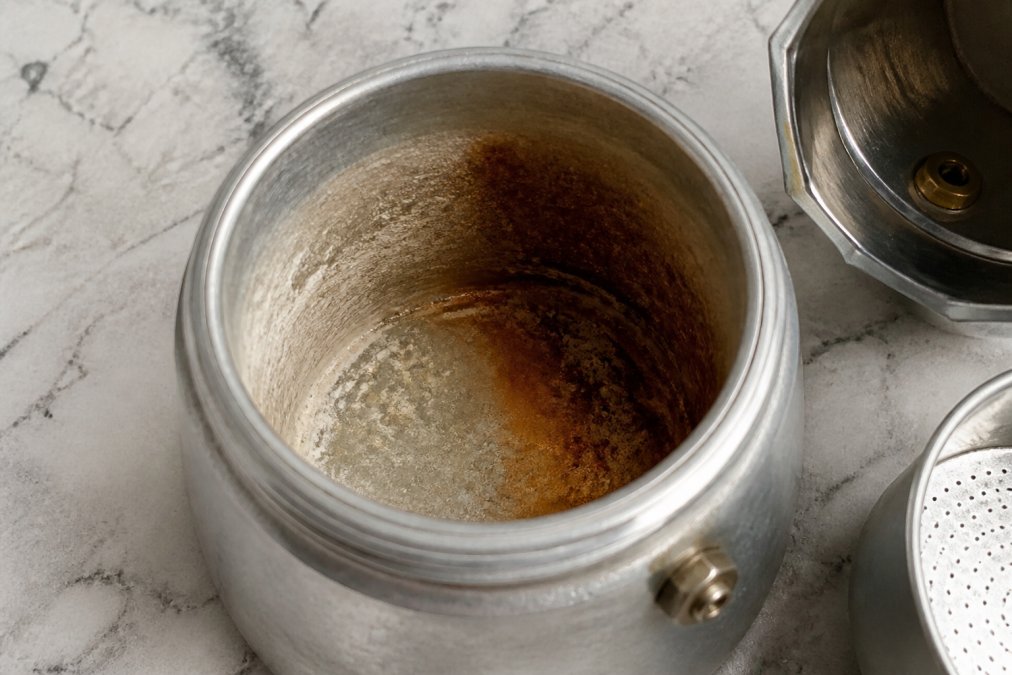
Mineral buildup appears as white, chalky, or grayish deposits, usually on lower chamber walls and in threaded areas. It feels rough or crusty and doesn't wipe away easily with water alone.
Coffee oil stains appear as brown, tan, or black discoloration, usually on the filter plate, coffee stem, and interior walls. They feel sticky when wet and dry to a hard, varnish-like coating.
If your moka pot has both, start with a citric acid soak to remove mineral deposits, then follow up with a baking soda paste to scrub away oil residue.
Descaling a moka pot safely keeps your brewer performing at its peak and extends its lifespan significantly. Natural methods, white vinegar, citric acid, and baking soda, work without damaging stainless steel, silicone, or the finish. Combined with daily rinsing and proper storage, your moka pot will brew rich, clean coffee for years.
If you're investing in a premium moka pot like the Fiamma & Ferro Linea Suprema, the engineering and material quality demand the same care. Our 304 stainless steel construction resists corrosion better than standard aluminum, and our OEM replacement components are designed to maintain that performance standard. Start with proper descaling today, and you'll protect your investment while ensuring every brew tastes its best.
Frequently Asked Questions
Is it safe to use vinegar to descale a moka pot?
Yes, white vinegar is one of the safest and most effective natural descaling agents for moka pots. Mix equal parts vinegar and water, fill the lower chamber, and let it soak for 15-20 minutes to dissolve mineral deposits. Vinegar is non-toxic and won't damage stainless steel when used properly. Always rinse thoroughly with fresh water afterward to remove any vinegar smell or taste from your next brew.
How often should you descale a stainless steel moka pot?
Descale your moka pot every 2-4 weeks if you brew daily, depending on your water hardness. Hard water requires more frequent descaling because mineral deposits accumulate faster. Daily rinsing and wiping help extend the time between deep descaling sessions. Watch for signs like slower brewing, reduced pressure, or a metallic taste, these indicate it's time to descale, even if less time has passed.
Can you use a moka pot with oxidation or corrosion?
Light surface oxidation on stainless steel is cosmetic and safe to use. However, if you notice pitting, deep corrosion, or rust spots, avoid using the pot until cleaned. Descaling with citric acid or vinegar removes light oxidation. If corrosion persists after cleaning, the gasket may need replacement, check the OEM replacement gasket set to restore a proper seal and prevent further damage.
What's the best way to remove stubborn mineral buildup from a moka pot?
For stubborn mineral deposits, use citric acid (more effective than vinegar on hard water residue). Dissolve 1-2 tablespoons of citric acid in 1 cup of warm water, fill the lower chamber, and soak for 30-45 minutes. For extremely stubborn buildup, create a paste with baking soda and water, apply it to affected areas, and gently scrub with a soft cloth. Avoid abrasive sponges, which can scratch stainless steel and create pitting that traps bacteria.