

Buy Stainless Steel Espresso Makers Online: A 2026 Guide
Table of Contents
- Why Stainless Steel Espresso Makers Matter
- Stainless Steel vs Aluminum Espresso Maker: Which is Better?
- Induction-Ready Moka Pot: What You Need to Know
- Brewing Authentic Italian Espresso at Home
- How to Clean Stainless Steel Coffee Maker and Maintain Seals
- Troubleshooting Common Brewing Errors
- Choosing Your Stainless Steel Espresso Maker
- Frequently Asked Questions
Last Updated: September 4, 2026
Why Stainless Steel Espresso Makers Matter
Most home coffee setups start with a plastic pod machine or an aluminum moka pot. Both deliver acceptable coffee, but both introduce compromises in material purity and longevity that many buyers don't consider until years later.
A stainless steel espresso maker solves those problems at the source. It is a stovetop brewing device built entirely from food-grade stainless steel, which means no aluminum contact with your coffee, no plastic components touching hot liquid, and no painted or coated surfaces that can chip or degrade over time. This material choice matters because coffee is acidic and hot, two conditions that can accelerate wear on lesser materials.

At fiammaferro.com, we've spent years engineering stovetop brewers around these exact concerns. The market for premium stovetop coffee equipment has grown as home baristas look for ways to brew rich, full-bodied coffee without relying on electricity or bulky machines. Specialty Coffee Association brewing guides note that manual brewing methods give users precise control over extraction, which is exactly what a quality stovetop maker provides.
The real advantage of stainless steel shows up in daily use. It resists rust, won't impart metallic flavors, and holds up to decades of regular brewing. If you're shopping for a long-term kitchen investment rather than a disposable gadget, material choice should drive your decision.
Stainless Steel vs Aluminum Espresso Maker: Which is Better?
The classic moka pot design popularized in the 1930s was almost always aluminum. That material conducts heat quickly and is inexpensive to produce, which is why it dominates the budget end of the market. But aluminum brings real drawbacks that many coffee drinkers eventually notice.
Aluminum is reactive. Acidic coffee can slowly erode the interior surface, which alters flavor over time and raises questions about long-term material safety. Aluminum pots also develop a patina that requires careful cleaning, and they are not compatible with induction cooktops since aluminum doesn't respond to magnetic induction fields.
Stainless steel addresses every one of these limitations. A stainless steel espresso maker offers better corrosion resistance, a neutral interior that won't affect coffee flavor, and induction compatibility for modern kitchens. The tradeoff is heat conductivity: stainless steel doesn't spread heat as evenly as aluminum on its own, which is why premium manufacturers use multi-layer base construction to improve thermal distribution.
For buyers weighing stainless steel vs aluminum espresso maker options, the decision comes down to priorities. Aluminum is lighter and cheaper. Stainless steel is more durable, safer for long-term use, and works on induction ranges. Health-conscious buyers increasingly choose stainless steel because it eliminates a reactive metal from their daily coffee ritual.
Induction-Ready Moka Pot: What You Need to Know
Induction cooktops are now standard in many American kitchens, and they require magnetic cookware. Aluminum moka pots simply don't work on induction surfaces, which forces many buyers to choose between their brewer and their stove.
An induction-ready moka pot solves this by using a stainless steel body with a magnetic grade of steel in the base. The 304 stainless steel used in quality brewers is food-grade and corrosion-resistant, but manufacturers must design the base to interact properly with induction coils.
When shopping for an induction-ready moka pot, check two things. First, confirm the product listing explicitly states induction compatibility. Second, look for a flat, thick base plate, which ensures even heat distribution across the brewing chamber. A thin or warped base leads to uneven extraction and burnt coffee.
The US Department of Energy's guidance on induction cooktops explains that induction cooking uses electromagnetic energy to heat the pan directly, which makes pan material the single most important compatibility factor. If you own an induction range, an induction-ready moka pot isn't a luxury, it's a requirement for stovetop espresso brewing.
The Fiamma & Ferro Linea Suprema stovetop espresso maker is engineered specifically for this use case. Its 304 stainless steel construction with copper PVD finish is fully induction compatible, so it moves seamlessly from induction cooktop to table without any special adapters.
Brewing Authentic Italian Espresso at Home
Stovetop espresso brewing is a pressurized extraction method that produces a concentrated, strong coffee closer to espresso than drip coffee. The process relies on boiler pressure: water heats in the lower chamber, builds steam pressure, and forces upward through ground coffee into the upper chamber.
A stainless steel espresso maker performs this same function as a traditional moka pot but with better material characteristics. The brewing principle is identical, which means you can achieve authentic Italian-style coffee without an expensive electric espresso machine.
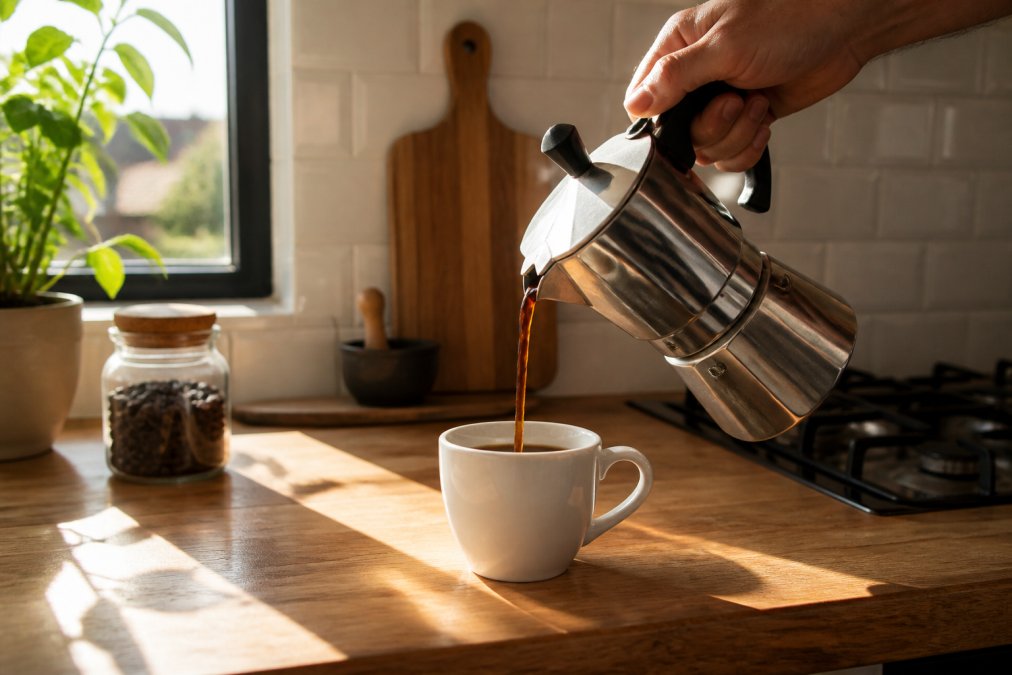
To brew properly, start with a medium-fine grind, slightly coarser than espresso machine grind. Fill the lower chamber with water up to the safety valve line, never above it. Add coffee to the basket without tamping, level it off, and screw the top chamber on firmly.
Place the pot on medium heat. The brew should start within a minute or two and flow steadily. When the stream turns from dark brown to light golden, remove the pot from heat immediately. This prevents over-extraction, which produces bitter, burnt flavors.
What most guides miss is that heat management matters more than grind precision for stovetop brewing. Too high a heat setting causes violent boiling and bitter coffee. A gentle, steady heat produces a slower, sweeter extraction. The stainless steel body of a quality moka pot helps here, as it distributes heat more evenly than thin aluminum walls.
How to Clean Stainless Steel Coffee Maker and Maintain Seals
Maintenance is where stainless steel brewers separate themselves from cheaper alternatives. A well-cared-for stainless steel coffee maker can last decades, but it does require a specific cleaning routine.
Cleaning a stainless steel moka pot is straightforward. After each use, allow the pot to cool completely, then rinse all components with warm water. Do not use soap on the interior of the brewing chambers, as soap residue can affect coffee flavor in subsequent brews. A simple rinse and wipe with a soft cloth is sufficient for daily maintenance.
For deeper cleaning, a common approach is to brew a cycle with water only and a small amount of white vinegar, which descales the interior without scratching the stainless steel surface. Rinse thoroughly afterward with several water-only brew cycles to remove any vinegar taste.
The most overlooked maintenance task is replacing the silicone gasket. The gasket creates the pressure seal between the upper and lower chambers, and it degrades over time with heat exposure and regular use. Most manufacturers recommend replacing the gasket every 12 to 18 months, depending on brew frequency.
A stainless steel coffee maker is generally dishwasher safe, but hand washing is recommended to preserve the finish. The copper PVD finish on premium models like the Linea Suprema requires gentle handling to maintain its mirror appearance over years of use.
Troubleshooting Common Brewing Errors
Even with a quality brewer, occasional issues arise. Most brewing problems trace back to one of four causes: grind size, heat level, water volume, or seal integrity.
Coffee tastes bitter or burnt. This usually means the heat was too high or the brew continued too long. Remove the pot from heat as soon as the flow lightens in color. Also check your grind size, a finer grind extracts more quickly and can over-extract.
Coffee tastes weak or sour. This indicates under-extraction. Your grind is likely too coarse, or you removed the pot too early. Use a slightly finer grind and allow the full brew cycle to complete.
Pot leaks steam around the seam. This is almost always a gasket issue. Inspect the silicone gasket for cracks or flattening, and replace it if it shows signs of wear. Also check that the upper and lower chambers are screwed together tightly.
Coffee takes too long to brew. Slow brewing often signals a clogged filter plate or a grind that's too fine. Clean the filter plate thoroughly and adjust your grind to a slightly coarser setting.
Metallic taste in coffee. With a stainless steel brewer, this is rare, but it can happen with a brand-new pot. Brew two or three water-only cycles before your first actual use to season the pot and eliminate any manufacturing residue.
| Problem | Likely Cause | Fix |
|---|---|---|
| Bitter, burnt coffee | Heat too high / over-extraction | Reduce heat, remove pot sooner |
| Weak, sour coffee | Grind too coarse / under-extraction | Use finer grind, complete brew cycle |
| Steam leaking at seam | Worn gasket | Replace silicone gasket |
| Slow brewing | Clogged filter or fine grind | Clean filter, coarsen grind slightly |
| Metallic taste | New pot residue | Brew 2-3 water-only cycles first |
Choosing Your Stainless Steel Espresso Maker
When you buy stainless steel espresso maker options online, several factors determine whether you end up with a brewer that lasts or one that frustrates you within months.
Capacity is the first decision. Moka pots are sized by cup count, but those cups are small espresso servings, not standard mug sizes. A 3-cup pot suits single drinkers, while a 6-cup pot works for couples. The 12-cup size, which holds roughly 20 ounces or 600 milliliters, serves multiple people or produces enough for several drinks in one session.
Material grade matters more than most listings reveal. Look for 304 stainless steel, which is food-grade and resists corrosion. Cheaper pots may use lower grades that are more prone to staining or pitting over time. Also verify there are no plastic components in contact with hot coffee.
Induction compatibility is essential if you own an induction cooktop. Many stainless steel pots are induction-ready, but always confirm before purchasing.
Build quality shows in the details. A well-engineered pot has a comfortable, heat-resistant handle, a smooth-threading connection between chambers, and a properly seated safety valve. These details separate premium brewers from budget alternatives.
For most buyers, the Fiamma & Ferro Linea Suprema 12-cup stovetop espresso maker represents the strongest combination of material quality, durability, and design. At $169.99, it delivers 304 stainless steel construction with no aluminum, no plastic, and no painted surfaces, plus a luxury copper PVD finish that makes it a centerpiece on any kitchen counter. Consumer Reports guidance on cookware materials consistently notes that stainless steel is the preferred material for cookware that must endure daily use without degrading.
For those building a complete home brewing setup, the Espresso Ritual Bundle pairs the moka pot with a titanium-coated precision manual grinder for $399.98. Fresh grinding immediately before brewing produces noticeably richer coffee, since pre-ground coffee loses volatile aromatic compounds within minutes of grinding.

A stainless steel espresso maker is a purchase you'll likely make once. Choose a brewer built from materials that will still perform decades from now, and you'll never need to shop for another one.
Choosing the right stovetop espresso maker means weighing material safety, induction compatibility, and long-term durability against budget constraints. Most coffee drinkers who upgrade from aluminum to stainless steel never go back, and the difference in brew quality becomes apparent within the first few cups. Fiamma & Ferro builds its Linea Suprema moka pots from 304 stainless steel with no aluminum, no plastic, and a protective copper PVD finish, designed for induction cooktops and backed by OEM replacement parts. Get started with Fiamma & Ferro and brew richer, cleaner coffee with a brewer built to last.
Frequently Asked Questions
Is there an all-stainless steel espresso maker with no aluminum or plastic?
Yes. Premium stainless steel espresso makers like the Fiamma & Ferro Linea Suprema are engineered entirely from 304 food-grade stainless steel with no aluminum, plastic, or paint. The entire brewing chamber, handle, and safety valve are stainless steel. This design eliminates concerns about material leaching and ensures durability. Check product specifications to confirm the handle, gasket materials, and internal components are food-safe stainless steel throughout.
Are stainless steel espresso makers induction-compatible?
Many are, but not all. Induction compatibility depends on the base material and magnetic properties. The Fiamma & Ferro stovetop espresso maker is fully induction-compatible, featuring a specially engineered base that works on induction, gas, and electric cooktops. When shopping, verify induction compatibility in the product specifications, as this feature is essential if you use an induction cooktop at home.
What is the best stainless steel espresso maker for home use?
The best choice depends on your priorities: capacity, heat distribution, aesthetic design, and induction compatibility. The Fiamma & Ferro Stainless Steel Stovetop Espresso Maker ($169.99) offers 12-cup capacity, premium 304 stainless steel construction, induction compatibility, and a polished copper PVD finish. For a complete system, the Espresso Ritual Bundle ($399.98) pairs the moka pot with a Titanium+ Professional Grinder, delivering fresh-ground espresso-style coffee with minimal effort and maximum control.
Why is stainless steel better than aluminum for espresso makers?
Stainless steel offers superior durability, rust resistance, and material safety compared to aluminum. Aluminum is lighter but corrodes over time, especially when exposed to acidic coffee and mineral-rich water. Stainless steel maintains structural integrity for decades, distributes heat evenly, and eliminates concerns about aluminum leaching into coffee. Premium stainless steel (304 grade) also resists discoloration and maintains its polished finish with proper care, making it the choice for heirloom-quality coffee tools.