

Bialetti vs Alessi Moka Pot: 2026 Comparison Guide
Table of Contents
- Bialetti vs Alessi Moka Pot: Design and Material Differences
- Stainless Steel vs Aluminum Moka Pot: Performance and Flavor
- Best Induction Stovetop Espresso Maker Options and Compatibility
- Stovetop Espresso Maker Instructions: Brewing and Cleaning
- Durability, Spare Parts, and Long-Term Maintenance
- Price and Value: Which Moka Pot Is Worth It?
- Frequently Asked Questions
Last Updated: September 11, 2026
Bialetti vs Alessi Moka Pot: Design and Material Differences
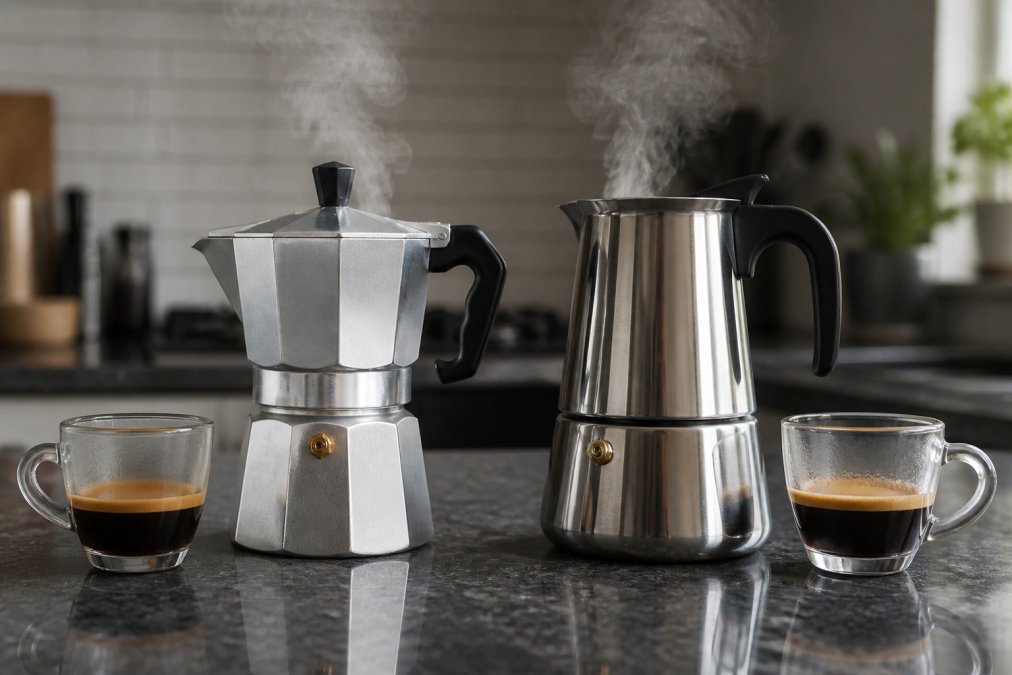
The Bialetti vs Alessi moka pot comparison starts with a fundamental split: Bialetti's classic octagonal aluminum body versus Alessi's sculptural stainless steel forms. Material choice shapes everything downstream, from heat response to how the pot ages. Bialetti built its reputation on affordable aluminum; Alessi treats the moka pot as a design object, often collaborating with architects. Neither approach is wrong, they serve different priorities.
Aluminum vs Stainless Steel Construction
Aluminum moka pots are lightweight, heat up fast, and cost less, but they oxidize, develop a patina, and require hand washing to avoid pitting. Stainless steel moka pots resist corrosion, work on induction, and hold their finish for decades, at the cost of slower thermal response and a higher upfront price. Aluminum suits traditional stovetop espresso with minimal fuss; stainless steel outlasts your kitchen remodel.
Handle, Knob, and Gasket Materials
Bialetti's classic models use a Bakelite or thermoplastic handle and knob, which stay cool but can crack with age; Alessi often specifies stainless steel or heat-resistant resin. Gaskets are the real wear item in both: silicone lasts longer than rubber and resists hardening. Replace gaskets annually or when the seal feels stiff.
Stainless Steel vs Aluminum Moka Pot: Performance and Flavor
Performance diverges sharply once heat hits metal. Aluminum conducts heat roughly twice as fast as stainless steel, reaching brewing temperature quickly but scorching grounds if you walk away (engineeringtoolbox.com). Stainless steel heats more gradually, giving a wider window to pull the pot at the right moment, which is why many enthusiasts find it easier to control for repeatable results.
Thermal Conductivity and Heat Retention
Aluminum's thermal conductivity means faster extraction but less forgiveness; stainless steel's lower conductivity and higher heat retention produce a steadier brewing temperature. Aluminum rewards attention; stainless steel tolerates distraction better.
Taste Profile Calibration: Body, Acidity, and Bitterness
Flavor differences come down to how each metal manages heat. Aluminum tends to produce a heavier body with more pronounced bitterness if the brew runs hot; stainless steel, with its gentler curve, often yields a cleaner cup with brighter acidity and less astringency. You can calibrate either, grind coarser for aluminum, finer for stainless steel, but material behavior is not adjustable.
Best Induction Stovetop Espresso Maker Options and Compatibility
Induction compatibility is the biggest practical divide in this comparison, and the most misunderstood. An induction cooktop drives alternating current through a copper coil beneath the glass, generating a rapidly reversing magnetic field that only couples with ferromagnetic material, one a magnet sticks to. Aluminum and copper aren't ferromagnetic, so a bare aluminum moka pot on an induction burner sits there doing nothing.
Why Aluminum Pots Fail on Induction, and What Fixes It
There are only three ways an aluminum moka pot can work on induction:
- A bonded steel base plate. A disc of ferritic stainless steel (often grade 430) is welded or brazed to the aluminum body's bottom. The field couples with the disc, which heats and conducts into the aluminum. It works, but the bond line is a long-term failure point, thermal cycling can delaminate a poorly made plate.
- A full stainless steel body. A pot made entirely from magnetic-grade stainless steel (304 is common; 430 and 18/0 are more strongly magnetic) couples directly with the field, no bond line, no delamination risk, and the entire base acts as the heating surface.
- An aftermarket induction adapter disc. A separate steel plate you place on the burner under the pot. It works, but it wastes energy heating the air gap and makes the brew cycle harder to control.
How to Test Any Moka Pot Before You Buy
The test takes five seconds and a refrigerator magnet. Hold the magnet against the bottom of the pot. If it sticks firmly, the base is ferromagnetic and the pot will work on induction. If it slides off or clings weakly, it will not. This is the same test Consumer Reports on induction cooktop compatibility recommends for any cookware, and it is far more reliable than reading marketing copy that says "induction ready."
Heating Efficiency: What the Numbers Actually Look Like
Induction is the most efficient stovetop technology available, transferring roughly 85-90% of the energy it draws into cookware, versus 40-55% for gas and 65-75% for electric coil or radiant. Because the moka brew cycle is short, a pot that reaches brewing temperature faster gives a narrower window between "ready" and "scorched," so induction owners often need to drop the burner to medium-low sooner than on gas.
Stainless steel's lower thermal conductivity, roughly half that of aluminum, becomes an advantage here: the base heats, but heat spreads through the body more slowly, so the reservoir water warms gradually and the extraction curve is flatter.
What to Look For in an Induction-Ready Moka Pot
- A magnetic base you can verify with a magnet. Grade 304 stainless is a reasonable default; strongly magnetic grades like 430 couple more aggressively.
- A flat, full-contact base. A warped or recessed bottom won't sit flush on the glass and heats unevenly.
- A base diameter matching your smallest burner ring. Induction coils are sized; a much smaller pot wastes the outer ring, and a much larger one heats only in the center.
- No aluminum in the water path if material purity matters. A bonded steel plate puts steel outside and aluminum inside; a full stainless body keeps the brew path non-aluminum.
For induction owners, fiammaferro.com's Linea Suprema moka pot is built from 304 stainless steel with an induction-ready base, no aluminum, no plastic, and a copper PVD mirror finish. It is designed for customers who care about material purity, flavor, durability, elegant design, and a beautiful daily coffee ritual.
| Feature | Aluminum Moka Pot | Stainless Steel Moka Pot |
|---|---|---|
| Induction compatible | No (unless a bonded steel base plate is present) | Yes (magnetic base, typically 304 or 430) |
| Magnet test result | Does not stick | Sticks firmly |
| Heat-up speed | Fast | Moderate |
| Corrosion resistance | Low | High |
| Weight | Light | Heavier |
| Best for | Gas and electric | Induction and all surfaces |
Stovetop Espresso Maker Instructions: Brewing and Cleaning
Good stovetop espresso maker instructions apply to both materials. Fill the base with water to just below the safety valve, add medium-fine grounds to the funnel without tamping, and assemble finger-tight. Brew on medium heat, remove when the flow turns pale and sputters, and stir before pouring. The variables that matter most are grind size, water level, and when you pull the pot off the heat.
Coffee-to-Water Ratio and Grind Settings
A reliable starting ratio is 1:10 coffee to water by weight, adjusted to taste. Grind medium-fine, like table salt, not espresso-fine: too fine chokes the flow and raises bitterness, too coarse tastes thin. For cleaning, rinse both materials with warm water and dry immediately. Never put aluminum in a dishwasher; stainless steel tolerates occasional cycles, but hand washing preserves the finish.
Durability, Spare Parts, and Long-Term Maintenance
Longevity favors stainless steel, but spare parts availability decides whether any pot survives a decade. A moka pot has four wear items, and knowing which one is failing, and whether you can still buy a replacement, is the difference between a fifteen-year pot and a three-year pot.
The Four Wear Items and How They Fail
- The gasket (seal ring). The most common failure. It sits in the upper chamber and seals against the funnel's top rim. Rubber gaskets harden, crack, and lose elasticity with heat cycling; silicone resists hardening longer. A hardened gasket lets steam escape before water is pushed through the grounds, which is why a pot that suddenly brews weak, sputters early, or leaks at the seam is almost always a gasket problem.
- The filter plate. The perforated disc above the gasket. It clogs with fine grounds and oils, and the holes can deform if the pot is overtightened. A clogged plate raises the pressure needed to push water through, slowing the brew and forcing steam past the gasket.
- The funnel. The basket holding the grounds. It can warp if the pot is run dry or dropped, and a warped funnel won't seat against the gasket, causing the same symptoms as a bad seal.
- The handle and knob. Bakelite and thermoplastic handles stay cool but become brittle with age and can crack at the mounting screw. Stainless steel or heat-resistant resin handles last longer but can still loosen.
A Simple Diagnostic Sequence
Before you replace the whole pot, run this order:
- Leaking at the seam or weak brew? Replace the gasket first. It is the cheapest fix and the most common cause.
- Still weak after a new gasket? Inspect the filter plate for clogged holes and the funnel rim for warping or nicks.
- Handle loose or cracked? Tighten the mounting screw; if the material is brittle, replace the handle rather than risk a burn.
- Steam escaping from the safety valve? The valve is doing its job, the real problem is downstream, usually a clogged filter plate or an overfilled base.
Sourcing Parts: Where the Two Brands Diverge
This is where the ownership experience splits sharply. A mass-market aluminum pot benefits from ubiquity: gaskets, filter plates, funnels, and handles are widely stocked, sold in multi-packs, and cheap enough that most owners keep a spare gasket on hand. Match the pot's cup capacity to find the right size (a 3-cup gasket is not a 6-cup gasket).
Design-forward stainless steel models are a different story. Because the body is often a single sculptural form with proprietary dimensions, the gasket and filter plate may be model-specific rather than cross-compatible. Confirm parts availability before buying and buy a spare gasket with the pot. A pot with no available gasket has a fixed service life.
The Maintenance Routine That Actually Extends Life
- Rinse and dry immediately after every brew. Residual grounds and moisture drive oxidation in aluminum and staining in stainless steel.
- Never put aluminum in a dishwasher. Alkaline detergent strips the oxide layer and pits the surface.
- Hand wash stainless steel even though it tolerates the dishwasher. The finish, especially polished or PVD-coated, dulls faster in a dishwasher.
- Do not overtighten. Finger-tight is correct; cranking the halves together deforms the gasket and funnel rim, creating the leaks you were trying to prevent.
- Replace the gasket on a schedule, not on failure. Once a year for daily brewers, or whenever the seal feels stiff rather than pliable.
fiammaferro.com stocks OEM replacement parts and silicone gaskets for its stainless steel moka pots.
Price and Value: Which Moka Pot Is Worth It?
Value depends on how you brew. Aluminum moka pots cost less upfront and deliver the traditional result, but age visibly and need replacement sooner. Stainless steel costs more initially and rewards you with induction compatibility, corrosion resistance, and a longer service life. Pricing varies by model and retailer, so check fiammaferro.com for current pricing on stainless steel options. If you brew daily on induction and care about material purity, stainless steel is the better long-term buy.
Environmental Impact and Material Longevity
A pot that lasts twenty years beats three that last seven. Stainless steel's recyclability and corrosion resistance reduce replacement frequency, which lowers the overall material footprint. Aluminum is also recyclable, but its shorter service life and oxidation mean more frequent turnover. EPA guidance on recycling metals outlines how both materials fit into municipal recycling streams. Choosing durable equipment is one of the simplest ways to reduce waste in a daily ritual.
Most moka pot buyers eventually face the same decision: replace a worn aluminum pot every few years, or invest once in stainless steel that works on any cooktop. At fiammaferro.com, we build the Linea Suprema from 304 stainless steel with an induction-ready base, no aluminum, and no plastic, plus OEM replacement parts and silicone gaskets. If you want a moka pot that matches your induction range and your standards, get started with fiammaferro.com and brew richer, cleaner coffee with confidence.
Frequently Asked Questions
Which brand of moka pot is considered the best?
There is no single best brand for every kitchen. Bialetti is known for its classic aluminum design and widespread availability, while Alessi focuses on designer stainless steel models. For induction cooktops and plastic-free brewing, a stainless steel moka pot with an induction-ready base is the practical choice. Fiamma & Ferro offers premium stainless steel options engineered for durability and material purity.
Are Alessi moka pots worth the higher price point compared to Bialetti?
Alessi moka pots typically cost more because of designer collaborations and stainless steel construction. They suit buyers who want a sculptural object and induction compatibility. Bialetti aluminum models cost less but require hand washing and do not work on induction without a separate plate. If you value material longevity and design, the higher price can be justified.
What are the primary material differences between Bialetti and Alessi pots?
Most Bialetti moka pots use aluminum, which heats quickly but can oxidize and is not induction-compatible. Alessi produces both aluminum and stainless steel versions; their stainless models resist corrosion and work on induction. Stainless steel also avoids the metallic taste some drinkers notice with bare aluminum, though it heats more slowly.
Do Alessi moka pots produce a different flavor profile than Bialetti?
Yes, material and design affect extraction. Aluminum transfers heat faster, which can lead to a sharper, more bitter cup if the brew is rushed. Stainless steel heats more gradually, often yielding a smoother body with less astringency. Adjusting grind size and coffee-to-water ratio lets you calibrate taste on either pot, but stainless steel gives more forgiving temperature control.