

Best Coffee Beans for Moka Pot Brewing
Table of Contents
- What Makes Coffee Beans Suitable for Moka Pot Brewing
- Medium vs Dark Roast for Moka Pot: Which Profile Works Best
- Moka Pot Grind Size: Getting Consistency Right
- Arabica vs Robusta: Bean Selection for Stovetop Espresso
- Stovetop Espresso Maker Instructions: From Bean to Cup
- Common Brewing Mistakes That Ruin Moka Pot Extraction
- Selecting Fresh, Ethical Beans for Your Daily Ritual
- Frequently Asked Questions
Last Updated: September 1, 2026
What Makes Coffee Beans Suitable for Moka Pot Brewing
The best coffee beans for moka pot brewing share specific characteristics that unlock the stovetop espresso maker's potential for rich, bold flavor. Medium roast beans are the sweet spot, offering balance between acidity and body while delivering the concentrated, espresso-like shot the brewer is designed to produce.
Whole bean coffee is non-negotiable. Pre-ground coffee oxidizes rapidly, losing volatile aromatics that create crema and mouthfeel. Grinding fresh, just before brewing, preserves the flavor profile and ensures consistent particle size distribution.
Arabica beans are the primary choice because they naturally produce more crema and deliver cleaner, more nuanced flavor profiles compared to Robusta varieties. Beans sourced from high-altitude regions, typically 1,200 meters or above, perform exceptionally well in moka pots (peer-reviewed research). High-altitude cultivation produces denser beans with more pronounced acidity and body, both essential for stovetop espresso extraction.
Freshness is critical. Beans roasted within the past two to four weeks deliver optimal extraction (peer-reviewed research). After that window, CO2 escapes and oils begin to degrade, reducing crema and flattening the flavor profile.
Medium vs Dark Roast for Moka Pot: Which Profile Works Best
Medium roast outperforms dark roast for most moka pot applications because it preserves the balance between extraction clarity and body. Dark roast beans have lost much of their origin character in favor of roasted, smoky, or charred flavors that can dominate in the moka pot's concentrated output.
Dark roast beans are also more prone to over-extraction in a moka pot. The extended roasting process breaks down cell walls and increases surface porosity, making the beans more susceptible to rapid water penetration. When combined with the moka pot's direct heat and pressure, dark roast extraction can quickly tip from rich to bitter.
Medium roast strikes the right balance. The beans have developed enough body and oil to create crema without sacrificing the clarity and brightness that make moka pot coffee distinctive. For most home brewers, medium roast is the safer, more rewarding starting point.
Moka Pot Grind Size: Getting Consistency Right
Medium-fine grind is the standard for moka pot brewing. The grind must be fine enough to create resistance and extract properly, yet coarse enough to allow water to flow without channeling or creating an overly bitter cup.
Think of the grind as the traffic controller for water flow. Too coarse, and water rushes through, under-extracting and leaving a thin, sour cup. Too fine, and water moves slowly, over-extracting and producing a harsh, ashy finish. Medium-fine grind lands in the middle, allowing steady, even extraction.
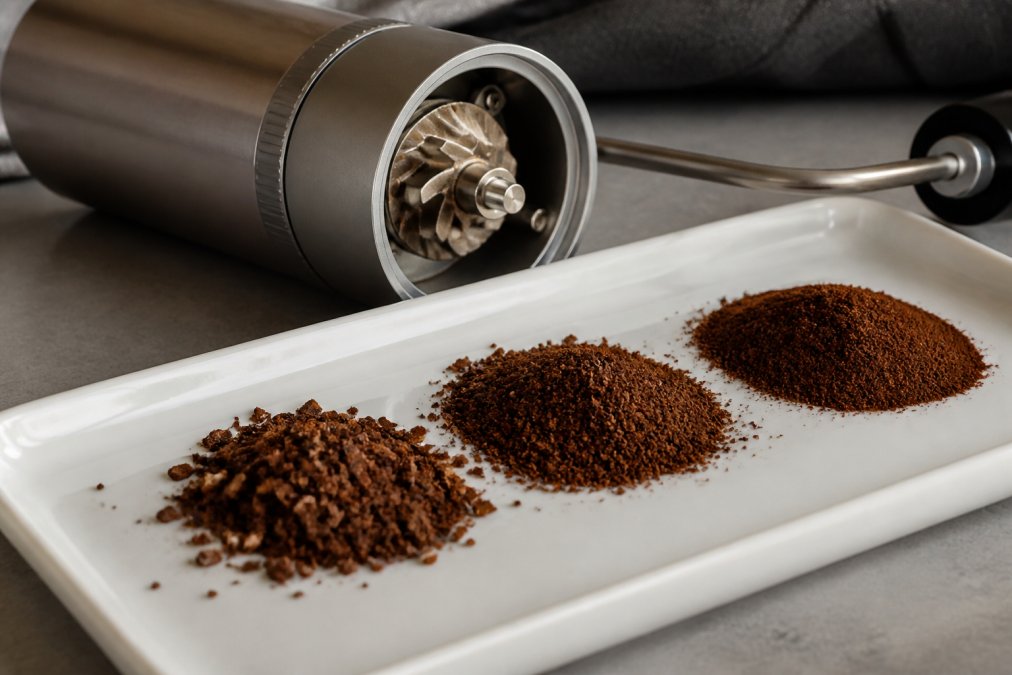
The consistency of your grind is actually more important than hitting a specific size. Uneven particles create multiple extraction rates within the same brew. A uniform medium-fine grind ensures every particle extracts at roughly the same rate, producing balanced, clean coffee.
Burr grinders deliver far superior consistency compared to blade grinders. Manual grinders with titanium-coated burrs, like the Fiamma & Ferro Titanium+ Precision Manual Coffee Grinder, offer exceptional consistency and control. The grind adjustment allows fine tuning across 180 settings, so you can dial in the exact particle size your specific moka pot and bean combination requires.

Grind consistency directly impacts crema formation. Consistent particles extract at the same rate, allowing proper pressure buildup and the emulsification of oils that create crema.
Arabica vs Robusta: Bean Selection for Stovetop Espresso
Arabica beans are the superior choice for moka pot brewing. Arabica naturally produces more crema due to its higher lipid content and more complex sugars. The flavor profile is cleaner, brighter, and more nuanced, qualities that shine through even in the concentrated, intense extraction that a moka pot delivers.
Robusta beans contain roughly twice the caffeine of Arabica and have a heavier body with a more pronounced, sometimes harsh bitterness (peer-reviewed research). In a moka pot, Robusta's heavy body and bitter compounds amplify, creating a cup that feels thick and one-dimensional rather than complex and satisfying.
A small percentage of Robusta, typically 5-15%, can add body and crema to an Arabica-dominant blend without introducing harshness. For single-origin moka pot brewing, stick with Arabica. High-altitude Arabica from regions like Ethiopia, Colombia, or Kenya performs exceptionally well, delivering brightness and clarity alongside the body and richness the brewer is designed to produce.
Stovetop Espresso Maker Instructions: From Bean to Cup
Proper technique transforms good beans into excellent moka pot coffee.
Step 1: Grind Your Beans
Grind fresh whole bean coffee immediately before brewing. Use a medium-fine grind, roughly the texture of fine sand. For a 3-cup moka pot, grind approximately 15-18 grams of coffee. For a 6-cup, use 30-36 grams.
Step 2: Fill the Water Chamber
Fill the bottom chamber with filtered water just below the safety valve. Filtered water is important; chlorine and minerals in tap water interfere with extraction and crema formation.
Step 3: Add Coffee to the Funnel
Spoon the ground coffee into the metal funnel basket. Don't tamp the grounds. Instead, level them gently with your finger or a small spoon. The coffee should be level with the top of the funnel.
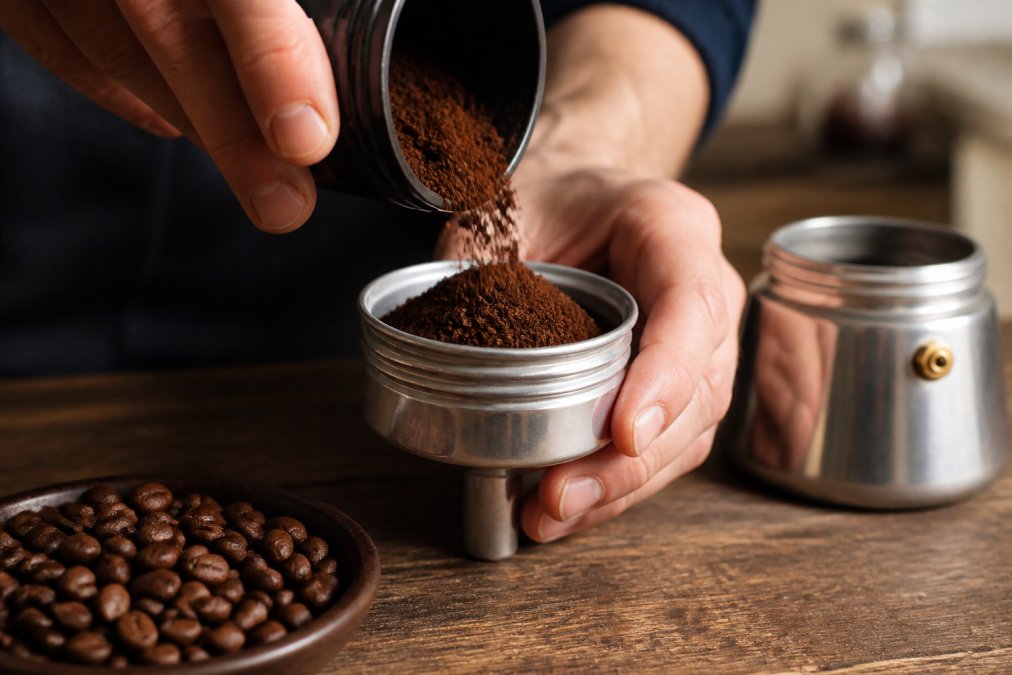
Step 4: Assemble the Moka Pot
Screw the top chamber onto the bottom chamber, making sure the rubber gasket is clean and properly seated. Hand-tighten only; over-tightening can damage the gasket.
Step 5: Heat on Medium Heat
Place the moka pot on a burner set to medium heat. Medium heat is crucial. High heat causes water to boil too rapidly, creating steam that rushes through the coffee without proper extraction. Listen for a gentle hissing sound as water heats.
Step 6: Monitor the Brew
Remove the moka pot from heat when you hear a loud hissing or gurgling sound, or when the coffee stops flowing and you see mostly steam. This typically takes 5-10 minutes. Don't wait for the pot to go silent, this indicates over-extraction and a bitter cup.
Step 7: Cool and Serve
Pour the coffee immediately into your cup. Leaving it in the pot continues extraction and makes the coffee bitter.
Common Brewing Mistakes That Ruin Moka Pot Extraction
Over-tamping the grounds is the most frequent error. Tamping creates uneven density and can block water flow entirely. Simply level the grounds gently and let gravity do the work.
Using high heat causes water to boil violently, creating steam that rushes through the coffee without extracting properly. Medium heat allows steady, even extraction.
Leaving the pot on heat too long over-extracts the coffee. Once the gurgling becomes loud or the coffee stops flowing, remove the pot immediately.
Using stale or pre-ground coffee destroys the flavor profile and crema. Grinding fresh, immediately before brewing, is non-negotiable.
Inconsistent grind size creates multiple extraction rates within the same brew. Invest in a quality burr grinder.
Ignoring the rubber gasket leads to leaks and uneven pressure. The gasket should be cleaned after each brew and replaced every 6-12 months. Fiamma & Ferro offers replacement gaskets designed for precision fit and long-term durability.

Filling the water chamber too high causes water to enter the funnel during brewing, diluting the coffee. Fill just below the safety valve.
Using unfiltered or mineral-heavy water affects extraction and crema formation. Filtered water produces cleaner extraction and better crema.
Selecting Fresh, Ethical Beans for Your Daily Ritual
Freshness is the foundation of excellent moka pot coffee. Beans roasted within two to four weeks are ideal. Check the roast date on the bag; reputable specialty roasters print this prominently.
Ethical sourcing matters both for the planet and for the coffee itself. Beans from farms that pay fair wages and practice sustainable agriculture tend to be higher quality. Look for certifications like Fair Trade, Rainforest Alliance, or direct-trade sourcing.
High-altitude, specialty-grade Arabica beans from ethical sources form the foundation of excellent moka pot brewing. The altitude produces denser beans with more pronounced acidity and body.
The Fiamma & Ferro Espresso Ritual Bundle pairs the Titanium+ Precision Manual Coffee Grinder with a premium stainless steel moka pot, creating a complete system for brewing exceptional coffee. The grinder's 180 grind settings and titanium-coated burrs ensure consistent particle size, while the moka pot's stainless steel construction and induction compatibility deliver reliable, beautiful brewing for years.
Your daily coffee ritual deserves attention. Starting with fresh, ethically sourced whole beans, grinding them immediately before brewing, and using proper technique transforms moka pot coffee from ordinary to exceptional.
Frequently Asked Questions
What roast level is best for coffee beans in a moka pot?
Medium roast is ideal for moka pots because it balances body and acidity while resisting over-extraction during the prolonged heat exposure. Medium roasts preserve the bean's origin characteristics without the bitterness that darker roasts develop. Avoid very light roasts, which can taste thin and sour, and use dark roasts only if you prefer bold, low-acidity flavor. The choice depends on your taste preference, but medium roast is the standard for stovetop espresso brewing.
Should I use whole bean or pre-ground coffee for my moka pot?
Whole bean coffee is superior for moka pot brewing. Grinding just before brewing preserves volatile oils and flavor compounds that oxidize quickly once exposed to air. Pre-ground coffee loses aromatics within days and produces flat, stale extraction. A precision manual grinder like the Fiamma & Ferro Titanium+ allows you to adjust grind size to medium-fine consistency, which is critical for proper moka pot extraction and achieving rich crema.
Does moka pot grind size really matter for flavor?
Yes, grind size directly controls extraction speed and water contact time. Too coarse, and water rushes through without extracting enough flavor, resulting in weak, watery coffee. Too fine, and the grounds compact, causing pressure buildup, over-extraction, and bitter taste. Medium-fine grind is the sweet spot for moka pots, allowing water to extract balanced acidity and body while avoiding bitterness. Consistent particle size matters as much as the size itself, a burr grinder ensures uniformity that blade grinders cannot achieve.
Are single-origin beans good for stovetop espresso makers?
Single-origin beans work well in moka pots if they are a medium roast with good body. Single-origins showcase distinct flavor profiles from their growing region, high-altitude Arabicas offer brightness and complexity, while lower-altitude beans provide natural sweetness and body. For stovetop brewing, choose single-origins roasted specifically for espresso or moka pot use rather than filter coffee roasts, which may taste thin under the extended heat. Blends are also excellent and often engineered for balanced extraction across different brewing methods.
Brewing excellent moka pot coffee starts with understanding what your beans need and what your equipment can deliver. Fresh, medium roast Arabica beans ground to consistent medium-fine size and brewed with proper heat management produce results that rival expensive espresso machines. Get started with Fiamma & Ferro's precision grinder and stainless steel moka pot, and discover how quality equipment and fresh beans transform your morning ritual into something genuinely exceptional.