

Melhor cafeteira moka de indução de 2026: espresso de aço inoxidável para fogão
Índice
- O que diferencia uma cafeteira moka para indução
- O material importa: aço inoxidável vs. alumínio para indução
- Como Usar uma Cafeteira Moka em Cooktops de Indução
- Instruções e melhores práticas para cafeteira espresso de fogão
- Principais recursos a procurar em uma cafeteira moka para indução
- Manutenção e durabilidade a longo prazo em cooktops de indução
- Por que a compatibilidade com indução é importante para o seu ritual de café
- Perguntas frequentes
Última atualização: 3 de setembro de 2026
O que diferencia uma cafeteira moka para indução
Uma cafeteira moka para indução é uma cafeteira espresso de fogão projetada com uma base ferromagnética que responde aos cooktops de indução. Diferentemente das cafeteiras moka tradicionais de alumínio, que não funcionam em cooktops de indução, um modelo compatível com indução usa uma construção de aço inoxidável ou um disco de interface para indução unido à base, criando as propriedades magnéticas necessárias para a transferência de calor.
Os cooktops de indução geram campos eletromagnéticos que ativam apenas metais ferromagnéticos, principalmente aço inoxidável e ferro. As cafeteiras moka comuns de alumínio simplesmente não aquecem em uma superfície de indução porque o alumínio não é magnético. Uma base de indução de alta precisão distribui o calor uniformemente, enquanto uma base mal projetada pode criar pontos quentes que queimam o café moído.
Na Fiamma & Ferro, projetamos nossas cafeteiras espresso de fogão em aço inoxidável 304, sem alumínio, plástico ou tinta, materiais escolhidos especificamente pela durabilidade em cooktops de indução e pela pureza do sabor. O aço inoxidável mantém sua integridade após centenas de ciclos de preparo e preserva o perfil de sabor limpo e intenso que você procura.

O material importa: aço inoxidável vs. alumínio para indução
O aço inoxidável domina o mercado compatível com indução porque é o único material que funciona de forma confiável com o aquecimento eletromagnético, proporcionando maior qualidade e durabilidade ao café. O alumínio simplesmente não consegue gerar a resposta magnética necessária para cooktops de indução.
Embora o alumínio conduza o calor mais rapidamente que o aço inoxidável, a intensidade do aquecimento por indução pode queimar o café moído e criar sabores amargos e tostados. A menor condutividade térmica do aço inoxidável modera a transferência de calor e cria um ambiente de preparo mais estável.
É na durabilidade que a diferença aumenta drasticamente. O alumínio oxida e se degrada com ciclos repetidos de aquecimento, desenvolvendo corrosão localizada interna, descoloração e vazamentos em dois a três anos de uso regular (pesquisa revisada por pares). O aço inoxidável resiste totalmente à corrosão e funcionará da mesma forma após dez anos que no primeiro dia. Além disso, o alumínio pode liberar metais em traços no café ao longo do tempo, especialmente com água ácida ou umidade armazenada, enquanto o aço inoxidável é inerte e mantém o café preparado limpo e sem contaminação.
Como Usar uma Cafeteira Moka em Cooktops de Indução
Usar uma cafeteira moka em cooktops de indução exige entender como o aquecimento por indução difere do cozimento tradicional no fogão. O processo é simples quando você compreende o princípio fundamental: os cooktops de indução exigem contato magnético contínuo com a base.
Passo 1: Encha o reservatório de água. Desrosqueie a câmara inferior e encha-a com água fria até pouco abaixo da válvula de segurança. Nunca ultrapasse a linha de água; isso cria um acúmulo perigoso de pressão. Use água filtrada quando possível; a água da torneira com alto teor de minerais deixa depósitos dentro da caldeira ao longo do tempo.
Passo 2: Adicione café finamente moído ao cesto do filtro. Use uma moagem fina, com textura semelhante à da areia. O tamanho da moagem é extremamente importante na indução, pois o aquecimento é mais intenso do que o aquecimento por chama de gás. Uma moagem mais grossa resultará em subextração, deixando o café fraco e azedo. Pressione o café moído delicadamente, mantendo-o nivelado e uniforme, sem compactá-lo.
Passo 3: Monte a cafeteira moka. Rosqueie a câmara superior na câmara inferior aplicando uma pressão firme e uniforme. Não aperte demais; isso danificará a vedação. A vedação cria o selamento que acumula pressão. Uma vedação desgastada é o motivo mais comum para cafeteiras moka vazarem ou não prepararem o café corretamente. A Fiamma & Ferro inclui vedações de reposição premium com cada cafeteira moka, projetadas para manter a integridade da vedação ao longo de centenas de ciclos de preparo.

Passo 4: Coloque a cafeteira moka sobre o cooktop de indução. Centralize-a diretamente sobre a zona de aquecimento. Os cooktops de indução funcionam por indução magnética, exigindo contato total entre a base ferromagnética e a superfície do cooktop. Você ouvirá um clique ou tom sutil quando o cooktop reconhecer a conexão magnética.
Etapa 5: Ajuste o cooktop de indução para fogo médio. Não use fogo alto. Os cooktops de indução aquecem rapidamente, e configurações altas farão a água ferver de forma muito intensa, empurrando o café para a câmara superior antes que ele seja devidamente extraído. O fogo médio (geralmente 50-70% da potência) proporciona um aquecimento constante e controlado. O preparo normalmente leva de 5-8 minutos, dependendo do tamanho da sua cafeteira moka e da potência do cooktop (pesquisa revisada por pares).
Etapa 6: Preste atenção ao som de borbulhamento. À medida que a pressão aumenta e a água quente força sua passagem pelo café moído, você ouvirá um som característico de borbulhamento ou chiado. Isso indica que a extração começou.
Etapa 7: Retire do fogo imediatamente quando o borbulhamento parar. Assim que ouvir o borbulhamento final e o som passar para um chiado fraco ou silêncio, o preparo estará concluído. Deixá-la no fogo por mais tempo queimará o café e criará um sabor amargo e queimado.
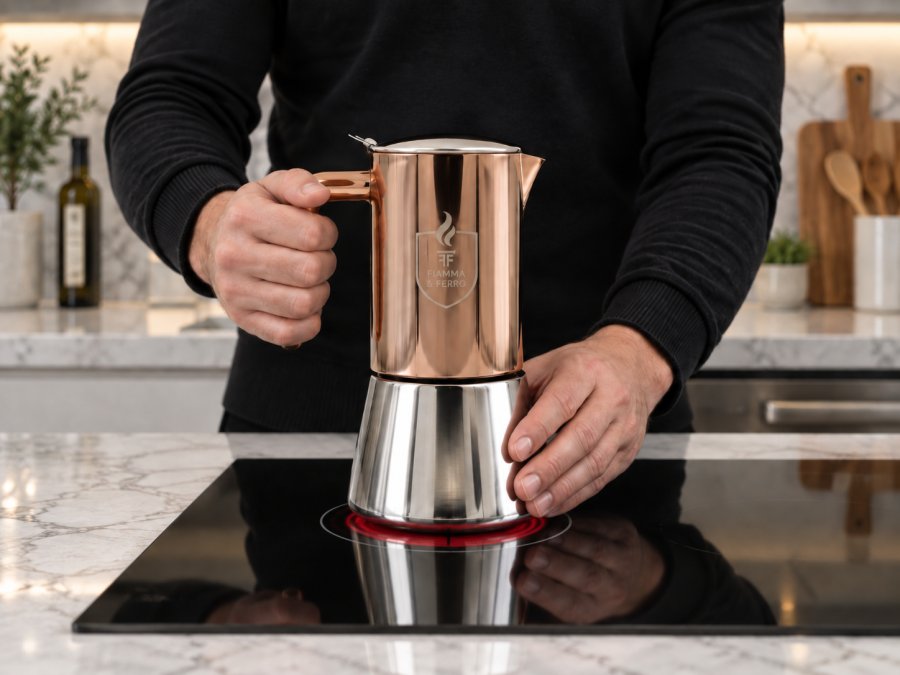
Etapa 8: Resfrie a base em água fria. Imediatamente, coloque a câmara inferior sob água fria por 10-15 segundos. Isso interrompe o processo de extração e evita a superextração.
Etapa 9: Sirva e aproveite. Desenrosque a câmara superior e despeje o café na xícara. O café deve estar escuro, aromático e encorpado, mais próximo do que você obteria com uma máquina de espresso manual.
Instruções e melhores práticas para cafeteira espresso de fogão
O ritual de preparar café com uma cafeteira espresso de fogão é fundamentalmente diferente do uso de máquinas de espresso automáticas, e é nessa diferença que está a qualidade. Você não está apenas aquecendo a água; está controlando a pressão, a temperatura e o tempo de extração com seu próprio julgamento e atenção.
Moer para a cafeteira moka exige uma precisão que a maioria dos apreciadores de café em casa não percebe. A moagem deve ser fina, mais fina que a do café coado, mas não tão fina quanto um verdadeiro pó para espresso; pense em uma consistência média-fina, como açúcar granulado. Em um cooktop de indução, onde o aquecimento é rápido e intenso, essa moagem fina se torna ainda mais importante. Uma moagem grossa fará a água passar rápido demais, resultando em subextração e em um café azedo e ralo.
A qualidade da água afeta o sabor mais do que a maioria das pessoas imagina. A água dura, com alto teor mineral, pode deixar depósitos dentro da sua cafeteira moka e criar um sabor levemente calcário. Vale a pena usar água filtrada pelo pequeno esforço adicional. Comece sempre com água fria, nunca quente.
Colocar o café no filtro é uma arte. Você deve deixar o pó nivelado e uniforme, com uma compressão suave. O objetivo é obter uma resistência uniforme ao fluxo de água, não a densidade máxima. Se você compactar demais, criará uma barreira que restringirá a passagem da água e poderá fazer a válvula de segurança abrir.
O controle do calor na indução é onde a maioria das pessoas tem dificuldade. Os cooktops de indução aquecem mais rapidamente do que os a gás ou com resistências elétricas, reduzindo sua margem de tempo. O calor médio é seu ponto de partida; o calor alto fará a água ferver violentamente e forçará o café a subir rápido demais. Ouvir sua cafeteira moka faz parte da técnica: o som borbulhante indica que a extração está acontecendo. Quando esse borbulhamento se tornar intermitente ou parar completamente, seu café estará pronto.
Principais recursos a procurar em uma cafeteira moka para indução
Ao avaliar uma cafeteira moka para indução, vários recursos técnicos diferenciam os equipamentos premium das alternativas econômicas.
O diâmetro e a espessura da base afetam diretamente a compatibilidade com indução e a distribuição do calor. A maioria dos cooktops de indução exige uma base com diâmetro mínimo de 4-5 polegadas. Uma base pequena demais não fará contato total com a zona de aquecimento, reduzindo a eficiência. Procure bases com pelo menos 3-4 mm de espessura. A cafeteira moka Fiamma & Ferro apresenta uma base projetada com precisão especificamente para um contato ideal com a indução e uma distribuição uniforme do calor.
A qualidade da vedação determina se sua cafeteira moka vedará corretamente e manterá a pressão. As vedações premium usam silicone próprio para contato com alimentos, resistente à degradação e capaz de manter a elasticidade ao longo de centenas de ciclos de preparo. Verifique se as vedações de reposição estão prontamente disponíveis e têm preço razoável. A Fiamma & Ferro inclui vedações de reposição premium e as oferece como peças sobressalentes acessíveis.
O design da válvula de pressão afeta tanto a segurança quanto a consistência do preparo. Uma válvula de segurança bem projetada abre na pressão correta, normalmente em torno de 2 bar, e evita a pressurização excessiva perigosa. Procure válvulas que sejam visíveis e fáceis de limpar.
A composição dos materiais e o método de construção determinam a durabilidade e a pureza do sabor. A construção totalmente em aço inoxidável, sem superfícies internas de alumínio ou plástico, garante que nada seja liberado no seu café. As uniões soldadas são superiores às estruturas rebitadas; as juntas soldadas são mais fortes e mais resistentes a vazamentos.
O design e a resistência ao calor da alça são mais importantes do que a estética. A alça deve permanecer fria durante o preparo e oferecer uma pegada ergonômica. As opções de capacidade variam de 1 xícara (50ml) a 12 xícaras (600ml), sendo as de 6 xícaras (300ml) e 12 xícaras (600ml) as mais populares.
A garantia e o suporte ao cliente refletem a confiança do fabricante em seu produto. A Fiamma & Ferro oferece suporte completo para cada cafeteira moka, além de acesso a peças de reposição originais do fabricante.
Manutenção e durabilidade a longo prazo em cooktops de indução
Uma cafeteira moka de indução bem conservada funcionará perfeitamente por uma década ou mais.
Após cada uso, desmonte completamente a cafeteira moka e enxágue as três câmaras em água corrente morna. Use uma escova macia ou um pano para remover os resíduos de café do filtro e do interior da câmara superior. Seque completamente todos os componentes antes de remontar e guardar.
A vedação merece atenção especial. Após cada 50-75 ciclos de preparo, verifique se há rachaduras, endurecimento ou perda de elasticidade na vedação. Substitua-a imediatamente se ela tiver perdido a flexibilidade; uma cafeteira moka com vazamento é perigosa e produz um café fraco e inconsistente. Mantenha peças sobressalentes à mão.
A válvula de segurança deve ser verificada mensalmente. Remova a câmara inferior da cafeteira moka e segure-a contra a luz. Olhe pela abertura da válvula para garantir que ela esteja livre de resíduos de café ou depósitos minerais. Se notar acúmulo, use um palito de dente ou uma escova pequena para removê-lo delicadamente.
Depósitos minerais se acumulam com o tempo, especialmente com água dura da torneira. A cada três meses, encha a câmara inferior com partes iguais de vinagre branco e água, monte a cafeteira moka e faça um ciclo completo de preparo no seu cooktop de indução. Essa solução ácida dissolve os depósitos minerais sem danificar o aço inoxidável. Após o ciclo com vinagre, faça dois ciclos completos com água limpa para remover qualquer resíduo de vinagre.
Armazenamento deve ser feito em um local fresco e seco. Nunca armazene a cafeteira moka montada ou com a vedação comprimida em seu interior por longos períodos; isso faz a vedação perder elasticidade. Desmonte-a completamente e armazene a vedação separadamente.
Compatibilidade com cooktops de indução permanece estável ao longo do tempo se você seguir as instruções de uso adequadas. Nunca use configurações de calor alto, pois isso acelera o desgaste da vedação e pode deformar a base ao longo dos anos. O calor médio é o padrão; é tudo de que você precisa para preparar o café da melhor forma e maximizar a vida útil do equipamento.
Peças de reposição são essenciais para uma utilização prolongada. Fabricantes de cafeteiras moka de qualidade, como a Fiamma & Ferro, disponibilizam vedações, válvulas de segurança e cestos de filtro como peças de reposição acessíveis.
A durabilidade das cafeteiras moka compatíveis com indução, fabricadas em aço inoxidável 304, é excepcional. Uma cafeteira moka Fiamma & Ferro cuidada adequadamente durará mais do que a maioria dos equipamentos de cozinha e produzirá um café excelente e consistente por anos.
Por que a compatibilidade com indução é importante para o seu ritual de café
Os cooktops de indução agora representam a maioria das novas instalações de cozinha. Eles são eficientes em termos de energia, aquecem rapidamente e oferecem controle preciso da temperatura. Mas criaram um desafio de compatibilidade: as cafeteiras moka tradicionais de alumínio simplesmente não funcionam neles.
Uma cafeteira moka para indução preserva todo o ritual do café e se adapta à tecnologia moderna das cozinhas. Você continua moendo grãos frescos, compactando o cesto do filtro, ouvindo o borbulhar e retirando a cafeteira exatamente no momento certo. O controle manual, o envolvimento sensorial e o trabalho artesanal - nada disso muda. O que muda é que agora tudo funciona perfeitamente no seu cooktop de indução.
O perfil de sabor é idêntico ao do café tradicional feito na cafeteira moka. Você continua preparando a bebida a aproximadamente 1-2 bar de pressão, extraindo com uma moagem fina e criando um café encorpado e intenso, no estilo espresso. O aquecimento por indução é simplesmente o mecanismo; ele não altera a química da extração nem o sabor final.
Para os apreciadores de café preocupados com a saúde, a compatibilidade com indução é importante por outro motivo. Uma cafeteira moka de aço inoxidável de qualidade compatível com indução não contém alumínio, superfícies internas de plástico nem revestimentos químicos. Seu café entra em contato apenas com aço inoxidável de grau alimentício e vedações de silicone premium. Nada migra para a bebida.
Investir em uma moka compatível com indução também é investir em longevidade. Uma cafeteira de aço inoxidável de qualidade durará mais que seu cooktop de indução e atenderá várias gerações de apreciadores de café. Equipamentos premium, como a Cafeteira Italiana de Aço Inoxidável para Fogão Fiamma & Ferro, tornam-se parte da infraestrutura da sua cozinha: confiáveis, bonitos e funcionais por tempo indeterminado.
De acordo com pesquisas sobre a adoção de cooktops de indução, a tecnologia de indução agora equipa a maioria das novas cozinhas residenciais na América do Norte. Escolher uma moka compatível com indução garante que seu ritual de café continue viável à medida que a tecnologia das cozinhas evolui.
Para os apreciadores de café que valorizam o ritual mais do que a conveniência, a cafeteira italiana para fogão representa algo que a automação jamais poderá reproduzir. É o momento de atenção, o retorno sensorial, o conhecimento de que você preparou algo excelente com as próprias mãos. Uma moka compatível com indução preserva essa experiência e funciona com o cooktop que você já tem.
Preparar um café excepcional em casa não exige máquinas de espresso caras nem automação complicada. Uma moka compatível com indução de qualidade prepara um café rico e encorpado, no estilo espresso, por meio de um processo simples e elegante que você controla completamente. A Cafeteira Italiana de Aço Inoxidável para Fogão Fiamma & Ferro combina construção premium em aço inoxidável 304, compatibilidade com indução e precisão de nível industrial para criar uma moka que prepara um café melhor e dura décadas. Comece com a Cafeteira Italiana de Aço Inoxidável para Fogão Fiamma & Ferro - 20 oz / 600 ml (12 Xícaras) Moka Compatível com Indução e descubra como preparar café de forma intencional transforma seu ritual diário. Para quem está pronto para investir no sistema completo, o Kit Ritual de Espresso Fiamma & Ferro combina a moka com nosso Moedor de Café Manual de Precisão Titanium+, duas ferramentas projetadas para trabalhar em conjunto e proporcionar o café mais limpo e rico que seu cooktop de indução pode produzir.
Perguntas frequentes
Uma cafeteira moka de alumínio comum funciona em um fogão de indução?
Não. O alumínio não é ferromagnético e não responde aos sensores do cooktop de indução. As cafeteiras moka de alumínio padrão exigem um fogão a gás ou com resistência elétrica. Para cooktops de indução, você precisa de uma cafeteira moka com base ferromagnética de aço inoxidável ou um disco de interface para indução. As cafeteiras moka de aço inoxidável são a opção mais confiável para cooktops de indução, pois mantêm uma distribuição de calor consistente e contato direto com o sensor do cooktop.
Como sei se minha cafeteira moka está pronta para indução?
Verifique se a base é magnética aproximando um ímã da parte inferior. Se ele grudar, a cafeteira moka é compatível com indução. Procure descrições do produto que mencionem construção em aço inoxidável ou a indicação explícita de "compatível com indução". Modelos premium de aço inoxidável, como a Fiamma & Ferro Linea Suprema, são projetados com bases ferromagnéticas e camadas de distribuição de calor desenvolvidas especificamente para cooktops de indução. Evite cafeteiras moka de alumínio, a menos que incluam um adaptador de disco de interface para indução.
Qual é a diferença entre as instruções de uso de uma cafeteira espresso de fogão para indução e para gás?
Os cooktops de indução aquecem mais rapidamente e com mais precisão do que os a gás, portanto reduza a potência para média ou média-baixa para evitar o superaquecimento da válvula de pressão. Com o gás, é possível ajustar o calor continuamente; na indução, é necessário definir um nível e monitorar o processo de preparo. Ambos os métodos seguem as mesmas etapas de enchimento e montagem, mas a indução exige mais atenção ao controle da temperatura para extrair o melhor perfil de sabor.
Por que o diâmetro da base é importante para cafeteiras moka de indução?
Os sensores dos cooktops de indução precisam de contato adequado com a base para gerar calor. Um diâmetro de base que corresponda à zona de aquecimento do seu cooktop garante uma condução térmica eficiente e uma temperatura de preparo consistente. Uma base pequena demais pode não ativar o sensor; uma grande demais pode causar um aquecimento desigual. A maioria das cafeteiras moka de indução é projetada com diâmetros de base ideais (geralmente de 3-4 polegadas) para funcionar em cooktops de indução padrão. Verifique o tamanho mínimo da zona de aquecimento do seu cooktop antes de comprar.