

Common Moka Pot Brewing Mistakes to Avoid in 2026
Table of Contents
- Why Moka Pot Mistakes Ruin Your Coffee
- The Best Grind Size for Moka Pot (and What Happens When You Get It Wrong)
- Water Temperature and Chamber Filling Mistakes
- Tamping, Leveling, and Coffee-to-Water Ratio Errors
- Heat Management: How Flame Control Affects Extraction
- Moka Pot Troubleshooting Guide: Fixing Taste and Flow Problems
- How to Use a Stovetop Espresso Maker Correctly (Step-by-Step)
- Cleaning, Maintenance, and Gasket Replacement Cycles
- Conclusion: Brewing Better Moka Pot Coffee Starts with Avoiding These Mistakes
- Frequently Asked Questions
Last Updated: September 14, 2026
Why Moka Pot Mistakes Ruin Your Coffee
Most moka pot disappointment traces back to a handful of repeatable errors, not bad beans or a defective brewer. The common moka pot brewing mistakes to avoid are almost always mechanical: wrong grind, wrong heat, wrong fill level, or a worn seal. This guide from fiammaferro.com walks through each one, explains why it wrecks the cup, and shows the fix.
A moka pot is a pressure brewer. Water in the lower chamber heats, steam builds, and that pressure pushes water up through the coffee bed and into the upper chamber. Every mistake on this list interferes with that pressure curve or the coffee bed itself. Get the mechanics right and the brewer rewards you with a thick, syrupy, espresso-style cup. Get them wrong and you get sour, bitter, or metallic coffee that no amount of sugar will rescue.
Below, we'll show you exactly how to diagnose and fix each problem, plus the maintenance habits that keep a stovetop espresso maker performing for years.

The Best Grind Size for Moka Pot (and What Happens When You Get It Wrong)
The best grind size for moka pot is a medium-fine grind, roughly between drip coffee and espresso, with a texture closer to fine table salt than powder. Too coarse and water races through the bed, producing weak, sour, under-extracted coffee. Too fine and the bed chokes, pressure spikes, and you get harsh, bitter over-extraction.
Here's the practical test. Pinch a small amount between your fingers. If it feels like fine sand with a little resistance, you're close. If it feels like flour, you've gone too fine. If it feels like cornmeal, go finer.
Grind consistency matters more than the exact setting. A mix of boulders and dust extracts unevenly: the fine particles over-extract into bitterness while the coarse ones under-extract into sourness, and the cup tastes muddy and confused.
Why a Burr Grinder Matters for Consistency
Blade grinders chop beans into random particle sizes, which is the single biggest cause of inconsistent moka pot extraction. A burr grinder crushes beans between two cutting surfaces set to a fixed gap, so every particle comes out roughly the same size. That uniformity is what lets you dial in a repeatable cup.
For moka pot specifically, look for a grinder with enough adjustment range to land between espresso and drip. The Fiamma & Ferro Titanium+ Precision Manual Grinder offers 180 grind settings with CNC-cut titanium-coated burrs, which gives you the resolution to fine-tune a moka grind rather than guessing between two coarse steps.

Water Temperature and Chamber Filling Mistakes
Two errors dominate here: overfilling the water chamber, and starting with cold water when pre-heated water would serve you better. Both distort the brew cycle in ways you can taste.
Never fill above the safety valve. That valve is a pressure relief mechanism, not a fill line suggestion. Water above it can block the valve and create a genuine safety hazard, and it also leaves no headspace for steam to build properly. Fill to just below the valve, every time.
Cold water is the traditional approach, and it works, but it exposes the coffee to a longer, slower heating phase. Pre-heated water shortens the time the grounds sit in the brewer before extraction begins, which reduces the chance of scorching.
Pre-Heated Water vs. Cold Water: Which Is Better?
Pre-heated water produces a cleaner, less bitter cup in most cases, because the coffee spends less time heating inside the brewer before extraction starts. Cold water is more forgiving if you're distracted and likely to walk away, since the longer ramp gives you more margin before the brew runs hot.
Try both with the same beans and grind. Most people notice the pre-heated version tastes smoother and less harsh, especially with darker roasts.
Tamping, Leveling, and Coffee-to-Water Ratio Errors
Do not tamp moka pot coffee. This is the mistake that trips up people coming from espresso, where tamping is mandatory. In a moka pot, tamping compacts the bed, restricts flow, and drives pressure up until the brew sputters or stalls. Fill the filter basket, then level the surface gently with a flat edge or your finger. That's it.
The coffee-to-water ratio for a moka pot is simpler than most people make it. Fill the basket loosely to the rim without pressing, and fill the water chamber to just below the valve. The brewer's geometry handles the ratio for you, which is why the basket exists in the first place.
A common mistake is under-filling the basket and then tamping to compensate. That produces a thin, weak cup. Fill it level, leave it loose, and let the brewer do its job.
Heat Management: How Flame Control Affects Extraction
Medium heat is the target, and low-and-slow beats high-and-fast every time. A gentle flame lets the water heat evenly and rise through the coffee at a controlled rate, producing a smooth, full extraction. A roaring flame forces the brew too fast, scorches the grounds, and pushes the brewer toward spitting.
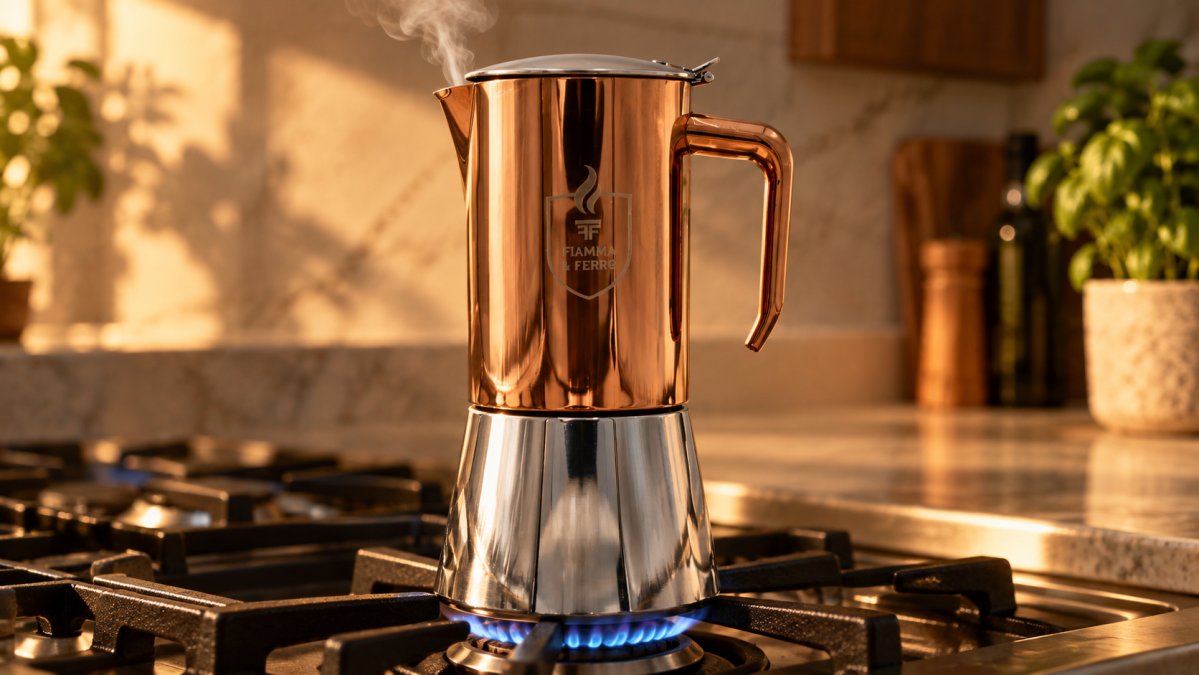
Match the flame to the base of the brewer, not the sides. On a gas stove, keep the flame inside the footprint of the pot so the handle and upper chamber don't overheat. On induction, use a lower power setting than you'd expect; induction heats fast, and the residual heat in the base keeps the brew going after you cut power.
Advanced heat management comes down to one move: pull the pot off the heat the moment the flow turns from a steady dark stream to a pale, sputtering trickle. That sputter is steam, not coffee, and it's the signal that extraction is finished. Leaving the pot on the burner past that point is how you get burnt, metallic flavors.
Moka Pot Troubleshooting Guide: Fixing Taste and Flow Problems
Most moka pot problems fall into two buckets: flow problems and taste problems. Flow problems usually point to grind, fill level, or a worn gasket. Taste problems usually point to heat, grind, or water chemistry. Work through them in that order, and change only one variable at a time so you can actually tell what fixed it.
Why Your Moka Pot Is Spitting or Spurting
Spitting means the brew is finishing too fast, usually because the heat is too high or the grind is too coarse. The water finds the path of least resistance, races through the bed, and emerges as steam-driven sputter instead of a controlled flow. Lower the flame and check your grind consistency.
A worn gasket seal can also cause spitting by letting pressure escape around the filter plate instead of pushing through the coffee. If the seal is hard, cracked, or flattened, replace it. A common pattern is a pot that brews fine for months, then starts spitting no matter how carefully you dial in the grind, that's almost always the seal, not your technique.
A third, less obvious cause is a partially clogged filter plate or funnel. Fine particles and mineral scale build up in the holes over time, restricting flow unevenly. Hold the filter plate up to a light; if you can't see daylight through every hole, soak it in a diluted descaling solution and scrub with a soft brush before you blame the grind.
Fixing Burnt, Bitter, or Metallic Tasting Coffee
Bitterness usually means over-extraction: too fine a grind, too much heat, or leaving the pot on the burner too long. Metallic tastes often trace to a dirty brewer, mineral buildup, or a lower-quality metal in the brewing chamber. Burnt flavors almost always mean the pot was left on the heat after the brew finished.
Troubleshooting by taste profile is where most guides stop short. Instead of guessing, use the taste map below. Find the flavor closest to what you're tasting, then make the single adjustment in the right column and brew again.
What You Taste |
What's Actually Happening |
First Adjustment |
|---|---|---|
Sour, sharp, thin |
Under-extraction, water moved through too fast |
Grind finer in small steps; check grind consistency |
Bitter, harsh, drying |
Over-extraction, too much contact time or heat |
Coarsen grind slightly; lower the flame |
Metallic, flat |
Mineral scale or reactive metal in the brew path |
Descale the brewer; confirm stainless steel contact surfaces |
Burnt, ashy |
Pot left on heat after the flow finished |
Pull off at the first pale sputter, not after |
Salty or oddly savory |
Water chemistry, high mineral or chloride content |
Switch to filtered water and re-brew the same beans |
Muddy, inconsistent cup to cup |
Uneven particle size from a blade grinder |
Move to a burr grinder with a fixed gap |
Weak but not sour |
Under-filled basket or coarse grind |
Fill the basket level and loosen the grind one step |
Work one row at a time. If you change grind and heat together, you won't know which one fixed the cup, and you won't be able to repeat it.
Water Quality: The Variable Most Guides Ignore
Water is roughly 98% of what ends up in your cup, yet almost every moka pot guide focuses only on temperature (Influence of Various Factors on Caffeine Content in Coffee Brews). Two water properties matter most for a stovetop brewer: hardness and chlorine.
Hard water carries dissolved calcium and magnesium. Those minerals are what form scale inside the boiler and up through the filter plate. Scale insulates the base, so the water heats more slowly and unevenly, which throws off the timing you've dialed in. It also narrows the filter holes, which changes flow. The result is a cup that tastes flat and metallic even when your grind and heat are perfect. According to the Water Quality Association's guidance on household water, hardness varies widely by source, which is why the same beans and method can taste different in two kitchens a few miles apart.
Chlorine and chloramine, used to disinfect municipal supplies, can taste chemical or medicinal when they're concentrated by brewing (the EPA). A simple carbon filter, a pitcher or an under-sink cartridge, removes most of both and costs far less than replacing a scaled brewer.
A practical middle ground: if your tap water tastes good to drink, it will usually brew acceptably. If it tastes flat, chalky, or heavily chlorinated, filter it. Very soft or reverse-osmosis water can actually under-extract because it lacks the minerals that help carry flavor, so if you use RO water, a small amount of remineralization or a blend with tap water often improves the cup.
How to Use a Stovetop Espresso Maker Correctly (Step-by-Step)
Using a stovetop espresso maker correctly comes down to seven steps, and skipping any one of them shows up in the cup. Here's the full sequence.
- Disassemble and rinse. Separate the lower chamber, filter basket, and upper chamber, and rinse each with warm water.
- Fill the water chamber. Add pre-heated or cold water to just below the safety valve. Never above it.
- Add coffee to the basket. Fill the filter basket level with a medium-fine grind, then level the surface gently. Do not tamp.
- Assemble the brewer. Screw the upper chamber on firmly, using a cloth if the base is warm. A loose fit leaks pressure.
- Set it on medium heat. Match the flame to the base. On induction, use a low setting.
- Watch for the flow. As coffee rises into the upper chamber, listen and watch. When the stream turns pale and starts to sputter, it's done.
- Pull it off the heat and pour. Remove the pot immediately, stir the coffee briefly to even out the extraction, and pour.
Expected result: a thick, dark, syrupy stream that slows into a pale trickle within a few minutes. If it's spitting from the start, your heat is too high or your grind is too coarse.
Cleaning, Maintenance, and Gasket Replacement Cycles
Clean your moka pot after every use with warm water and a soft cloth, and skip the dishwasher unless the manufacturer says otherwise. Abrasive cleaners and harsh detergents can damage finishes and leave residue that flavors the next brew. Dry every part fully before reassembling, trapped moisture between the upper and lower chambers is a common cause of a musty, stale note in the next cup.
The gasket is the part most people neglect, and it's the one that quietly degrades your coffee. A silicone gasket seal typically needs replacing every six months under regular use, but that interval is a starting point, not a rule. Hard water shortens it. If you descale monthly because your water is hard, inspect the gasket at the same time, scale and heat cycling both harden rubber faster.
How to Inspect a Gasket Before It Fails
You don't need to wait for a leak to know a seal is done. Check it every few weeks with three quick tests:
- The pinch test. Pinch the gasket between your fingers. A healthy silicone seal springs back. If it feels stiff, slick, or leaves a crease that doesn't recover, it's hardening.
- The visual test. Look for cracks, flat spots, or a shiny, glazed surface. A gasket that has taken a permanent set, flattened where it meets the filter plate, won't seal evenly no matter how hard you screw the pot together.
- The seat test. Drop the gasket into its groove in the upper chamber. It should sit flush and stay put. If it lifts or spins freely, the groove or the gasket has worn out of shape.
A failing gasket doesn't always leak visibly. More often it lets pressure escape around the filter plate, so the brew runs weak and sputtery even when your grind and heat are dialed in. If you've corrected grind, fill level, and flame and the cup is still thin, replace the gasket before you change anything else.
Descaling: Match the Frequency to Your Water
Descale periodically if you live in a hard-water area. Mineral buildup restricts flow and insulates the base, which throws off your heat management. A diluted descaling solution or a vinegar-and-water cycle handles most buildup, followed by a thorough rinse.
How often depends on your water, not the calendar:
- Hard water (high mineral content): descale roughly every 4-8 weeks if you brew daily.
- Moderately hard water: every 2-3 months.
- Soft or filtered water: every 4-6 months, or when you notice flow slowing.
Signs you've waited too long: the brew takes noticeably longer to start, the flow is uneven, or the base develops a chalky white or gray film you can't wipe off. Descale before that film hardens into the filter holes.
Filter Plates, Funnels, and Other Wear Parts
Filter baskets and funnels wear too. A bent or dented funnel distorts water distribution and pressure balance, and a warped filter plate won't seat properly. If your brewer has started behaving inconsistently after years of use, inspect these components before blaming your technique.
A simple maintenance schedule that keeps a stovetop espresso maker consistent:
Interval |
Task |
|---|---|
After every brew |
Rinse all parts, dry fully, reassemble loosely |
Every 2-4 weeks |
Inspect gasket (pinch, visual, seat tests) |
Every 1-3 months |
Descale based on water hardness |
Every 6 months (or sooner with hard water) |
Replace gasket |
Annually |
Inspect filter plate and funnel for warping or clogged holes |
Replacement parts are inexpensive and widely available. The Linea Suprema Silicone Gasket Set is an OEM food-grade replacement designed to restore that seal. Keeping a spare on hand means you can swap it the moment the pinch test fails instead of waiting on a shipment while your coffee suffers.
Conclusion: Brewing Better Moka Pot Coffee Starts with Avoiding These Mistakes
Most moka pot frustration comes down to a short list of fixable errors: grinding too fine or too coarse, tamping when you shouldn't, overfilling the water chamber, and running the heat too high. Fix those four and you eliminate the majority of bad cups. Add a gasket replacement cycle and filtered water, and you've covered nearly everything that goes wrong.
At fiammaferro.com, we build the tools that make getting this right easier. The Linea Suprema Stainless Steel Stovetop Espresso Maker uses 304 stainless steel food-contact surfaces with no aluminum brewing chamber and no plastic touching your coffee, plus an induction-ready base that works across gas, electric, ceramic, and induction stovetops. Pair it with the Titanium+ Precision Manual Grinder for consistent medium-fine grinds, or grab the Espresso Ritual Bundle to get both. Get started with fiammaferro.com and brew a cleaner, richer cup from your first corrected batch.

Frequently Asked Questions
Why does my moka pot coffee taste burnt or metallic?
Burnt or metallic flavors usually come from too-high heat, over-extraction, or using an aluminum pot that has oxidized. When the flame is too high, the coffee boils rather than brews, scalding the grounds and releasing bitter compounds. A worn gasket can also let steam escape, raising the brew temperature. Switch to medium or low heat, pre-heat your water, and replace the gasket every six months. Stainless steel pots like the Linea Suprema avoid the metallic taste aluminum can impart after years of use.
Should I use boiling water in my moka pot base?
Yes, pre-heated water is one of the simplest fixes for bitter moka pot coffee. Filling the base with hot water (just below boiling) shortens the time the grounds spend exposed to heat, reducing the chance of scorching. Cold water means the pot sits on the burner longer, and the coffee can over-extract before it even starts flowing. Always fill to just below the safety valve and use a towel or mitt when handling the hot base.
How do I know if I ruined my moka pot?
Most moka pots are more resilient than people think. Signs of real damage include a warped base that no longer sits flat, a cracked funnel, or a gasket that has hardened and no longer seals. If your pot sputters, leaks, or brews inconsistently, the fix is usually a new gasket or funnel, not a new pot. For the Linea Suprema 12-cup, OEM replacement gaskets and funnels are available for $29.99 each, restoring performance without replacing the whole unit.
Why is my moka pot sputtering instead of flowing smoothly?
Sputtering happens when the water chamber runs dry before the brew finishes, or when the gasket seal fails and pressure escapes. It can also mean your grind is too fine, which clogs the filter and forces steam through in bursts. Try a slightly coarser grind, fill the base to just below the valve, and check the gasket for cracks or hardening. A silicone gasket replacement every six months keeps pressure steady and flow smooth.