

How to Make Iced Coffee with a Moka Pot: 2026 Guide
Table of Contents
- Why a Moka Pot Makes Excellent Iced Coffee
- What You Need: Equipment and Ingredients
- The Best Coffee Grind for Moka Pot Iced Coffee
- Step-by-Step: Brewing the Concentrate
- Cooling Without Thermal Shock: Fast and Safe Methods
- How to Prevent Bitter Moka Pot Coffee
- Dilution Management and Flavor Customization
- Iced Latte Recipe with Moka Pot
- Common Mistakes to Avoid
- Frequently Asked Questions
Last Updated: September 14, 2026
Why a Moka Pot Makes Excellent Iced Coffee
A moka pot brews a dense, syrupy concentrate that stands up to ice without turning watery, which is exactly what iced coffee needs. Learning how to make iced coffee with a moka pot gives you café-style intensity from a stovetop tool that costs a fraction of an espresso machine. A moka pot consistently wins on body and clarity.
Here's the core advantage: moka pots push water through the coffee bed under pressure, extracting a full-bodied, concentrated shot with visible crema. That concentration matters because ice melt dilutes whatever you pour over it. A weak brew becomes flavored water in minutes; a proper moka concentrate stays rich to the last sip.
The physics are straightforward. Water in the base chamber heats, pressure builds, and steam forces hot water up through the funnel and coffee grounds. how moka pot pressure extraction works explains the mechanics in more detail. What you get is roughly a 1:10 coffee-to-water ratio in the cup, far stronger than drip.
This guide covers grind size, brew steps, cooling without thermal shock, dilution math, and a full iced latte recipe. Most guides skip the cooling science entirely. That's a mistake we'll fix below.
What You Need: Equipment and Ingredients
Gather a moka pot, fresh whole beans, a burr grinder, filtered water, ice, and your milk and sweetener of choice. Everything else is technique. But the specific choices you make here determine whether your iced coffee tastes bright and clean or flat and metallic, so it's worth being deliberate about each item.
The Moka Pot Setup
A three-part moka pot: base chamber, brewing basket, and top chamber with a pressure valve. The valve is a safety release, not a decoration, it vents excess pressure if the basket clogs or the pot overheats. Never cover it, never fill past it, and inspect it periodically for mineral buildup that can seal it shut.
Material matters more for iced coffee than for hot. Aluminum pots conduct heat fast and can impart a faint metallic note that becomes more noticeable once the coffee is chilled and your palate isn't distracted by steam and heat. Stainless steel models avoid that taste, resist pitting from acidic coffee oils, and work on induction cooktops. Our Linea Suprema stainless steel stovetop espresso maker uses 304 stainless steel with no aluminum, plastic, or paint, so nothing but coffee touches your brew.

Size matters too. A 3-cup pot yields roughly 5 to 6 ounces of concentrate, enough for one large iced coffee or two small ones (home-barista.com). A 6-cup pot yields 10 to 12 ounces, which is better if you're brewing for a household or batch-prepping concentrate for the week. Buying a pot larger than you need and only half-filling the basket leads to uneven extraction, so match the pot to your actual daily volume.
Ice, Milk, and Sweetener Choices
Ice quality changes your drink more than most people expect. Large cubes melt slowly and dilute less; crushed ice chills fast but waters down the coffee. For iced coffee specifically, a 1-inch cube is the sweet spot, enough surface area to chill the drink in a few minutes, but slow enough that you're not drinking coffee-flavored water by the last third of the glass. If you have the freezer space, freeze leftover concentrate into cubes and use those instead of water ice. As they melt, they strengthen the drink rather than weakening it.
For milk, whole milk gives the creamiest iced latte because its fat content carries coffee aromatics and buffers acidity. Oat milk is the closest plant-based match in body and sweetness; almond milk is thinner and can make the drink taste watery faster. Half-and-half or a heavy cream float adds richness without much volume, which is useful when you want a small, intense drink rather than a tall one.
Sweetener dissolves best as a simple syrup, since cold drinks won't dissolve granular sugar well. Make a batch by heating equal parts sugar and water until the sugar dissolves, then cool and refrigerate. It keeps for about two weeks in a sealed jar. Honey works but clumps in cold liquid unless you thin it first with a splash of hot water. If you're using a flavored syrup, add it to the warm concentrate before chilling, the heat helps it incorporate evenly.
Water and Bean Freshness
Filtered water matters more than most guides admit. Chlorine and heavy mineral content both come through in a concentrated brew, and because moka pot coffee is roughly twice as strong as drip, any off-flavor in your water is amplified. If your tap water tastes fine cold, it will probably taste fine brewed, but if it has a noticeable chlorine or sulfur note, use filtered or bottled water.
Bean freshness is the other lever. Whole beans stay at peak flavor for about two to four weeks after the roast date, and pre-ground coffee loses most of its aromatic compounds within days. For iced coffee, where the cold temperature mutes aromatics further, starting with fresh whole beans makes a bigger difference than it does in a hot cup. Check the roast date on the bag, not the best-by date, the roast date is the one that tells you how old the coffee actually is.
The Best Coffee Grind for Moka Pot Iced Coffee
The best coffee grind for moka pot iced coffee is a medium-fine grind, finer than drip but coarser than espresso. Too fine and you'll clog the basket and scorch the grounds; too coarse and water races through, leaving a weak, sour cup.
Grind consistency matters as much as grind size. A burr grinder produces uniform particles, while blade grinders leave a mix of dust and boulders that extract unevenly. Our Titanium+ manual grinder offers 180 stepped settings, so you can dial in moka pot range precisely and repeat it every morning.

A quick visual test: your grounds should look like fine sea salt, clump slightly when pinched, and hold a soft impression. If they feel powdery, go coarser. If they feel gritty like cornmeal, go finer.
Step-by-Step: Brewing the Concentrate
Brewing moka pot iced coffee concentrate takes about 8 minutes total. Follow these steps for a clean, full-bodied base every time.
Total Time: 8 minutes Difficulty: Beginner
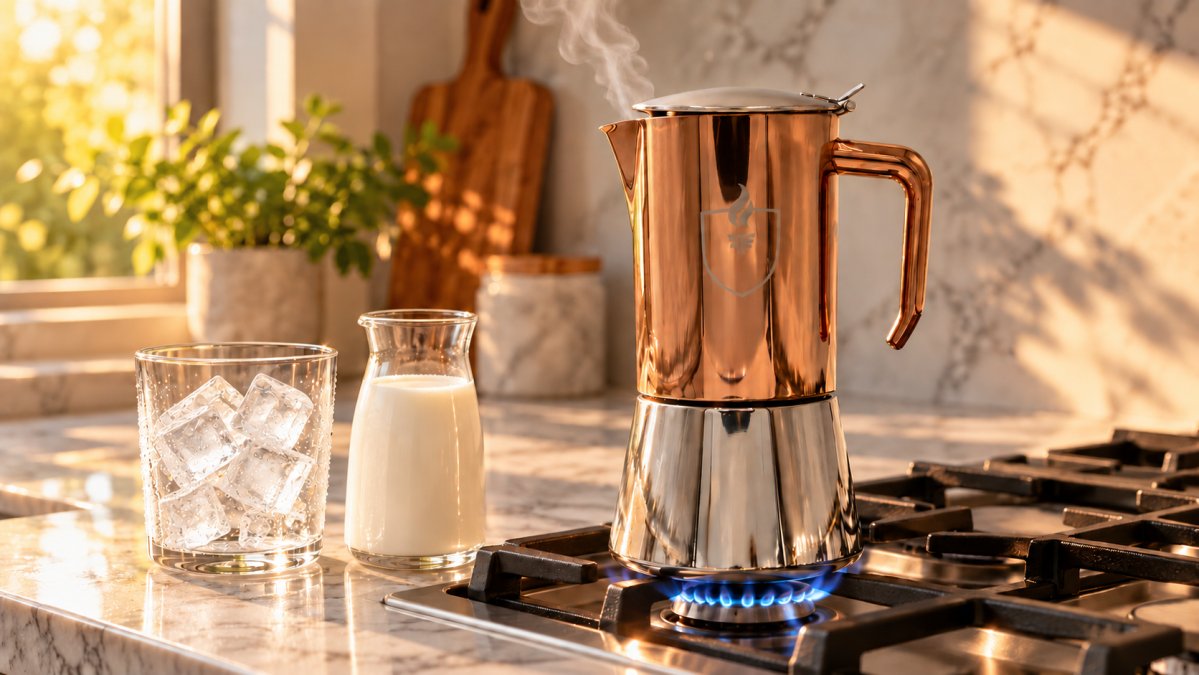
- Fill the base chamber with hot water to just below the pressure valve. Pre-heating the water reduces time on the stove and limits the scorching that causes bitterness.
- Add grounds to the basket and level them off. Do not tamp. A light tap to settle is enough.
- Insert the basket and screw on the top chamber firmly, using a cloth if the base is hot.
- Place on medium-low heat. High heat is the most common cause of burnt, bitter coffee.
- Listen for the brew. Coffee should flow in a slow, steady stream, honey-colored at first.
- Remove from heat when it sputters or the stream turns pale yellow and foamy.
- Stir the concentrate in the top chamber to even out the crema and body.
Expected Result: About 6 ounces of dark, aromatic concentrate with a thin layer of crema on top.
Cooling Without Thermal Shock: Fast and Safe Methods
Thermal shock is the sudden temperature change that cracks glass carafes and warps thin metal. Pouring near-boiling concentrate straight into a glass full of ice can shatter the glass and flash-melt your ice at the same time. Most iced coffee guides skip this entirely, which is a problem because moka pot concentrate comes off the stove at roughly 195 to 205°F, hot enough to crack a room-temperature tumbler in seconds.
The physics are simple. Glass expands when heated and contracts when cooled. A sudden drop of 150°F or more across a thin-walled tumbler creates uneven stress, and the glass fails at its weakest point. Thick borosilicate glass handles the swing better than thin soda-lime glass, but no glass is truly shockproof. Metal pitchers and heatproof carafes are the safe intermediate vessel.
Flash Chilling (Fastest, Best for Flavor Retention)
Pour the hot concentrate into a metal pitcher or a heatproof measuring cup, then set that vessel in a bowl of ice water. Stir for 60 to 90 seconds. The coffee drops to fridge temperature fast without cracking anything. This is the method most coffee professionals prefer for iced drinks because rapid cooling limits oxidation and preserves the volatile aromatics that give moka pot coffee its distinctive character. The trade-off is that you need a metal vessel and a bowl large enough to hold it, and you have to stand there stirring.
Refrigerator Rest (Slowest, Best for Body)
Pour into a sealed jar and chill for 30 to 60 minutes. Best flavor, slowest option. The slow cool-down lets the coffee settle and the crema integrate more fully into the liquid, which some brewers find gives a rounder, less sharp cup. The downside is planning ahead, this method doesn't work if you want iced coffee in the next five minutes. A sealed jar matters here because coffee absorbs refrigerator odors quickly, and a moka pot concentrate is strong enough to pick up yesterday's leftovers.
Frozen Coffee Cubes (Zero Dilution)
Freeze leftover concentrate in an ice tray and use those cubes in your glass. Zero dilution. This is the method to reach for when you want the full intensity of the concentrate to survive to the last sip. The cubes melt at the same rate as water ice but add coffee instead of water, so the drink gets slightly stronger over time rather than weaker. Make a batch of cubes on the weekend and you have a week's worth of iced coffee base ready to go.
Dilution-Based Cooling (Simplest, Most Forgiving)
Brew a slightly stronger concentrate, then pour it directly over a full glass of ice and let the melt do the chilling. This is the method most cafés use because it requires no extra equipment and no waiting. The catch is that you have to account for the melt in your brew ratio, see the dilution section below for the math. It's the least precise method but also the most forgiving, because you can always add more ice or more milk to adjust.
Pre-Chilled Glass and Vessel
Store your serving glass in the freezer for 10 minutes before pouring. A cold glass slows the initial melt and keeps the drink colder longer. This is a small step that makes a noticeable difference in how long your iced coffee stays enjoyable, especially in summer. Pair it with flash chilling for the best result, cold coffee into a cold glass over cold ice.
Which Method Should You Use?
The choice comes down to time and equipment. If you have five minutes and a metal pitcher, flash chill. If you have an hour and want the best flavor, refrigerate. If you want zero dilution and don't mind planning ahead, freeze cubes. If you want the simplest possible path, brew strong and pour over ice. None of these methods is wrong, they just trade off speed, equipment, and flavor in different ways.
How to Prevent Bitter Moka Pot Coffee
Bitter moka pot coffee almost always comes from three causes: too much heat, too fine a grind, or leaving the pot on the stove after the brew finishes. Fix those three and bitterness largely disappears.
Start with medium-low heat. Water should reach brewing temperature gradually, not violently. If your stove runs hot even on low, use a heat diffuser plate between the burner and the pot.
Grind is the second lever. If your coffee tastes harsh and dry, coarsen the grind by one or two steps and brew again. If it tastes sour and thin, go finer.
The third fix is timing. Pull the pot off the heat the moment the flow turns pale and sputters. Every extra second on the burner pushes steam through the grounds and pulls out harsh compounds. guidance on moka pot heat and extraction covers additional variables worth testing.
For iced drinks specifically, brew slightly stronger than you would for a hot cup. The ice will dilute the final drink, so a concentrate that tastes a touch intense on its own lands perfectly once chilled.
Dilution Management and Flavor Customization
Dilution management is the difference between a bold iced coffee and a sad, watery one. Track how much ice, water, and milk you add, and adjust your concentrate strength to compensate.
A simple framework: for every 2 ounces of concentrate, expect about 1 ounce of melt from ice over 15 minutes. If you want a 10-ounce finished drink, use 4 ounces of concentrate, 3 ounces of milk, and 3 ounces of ice. That lands the final coffee-to-water ratio near a strong drip coffee.
Flavor profile customization is where moka pot iced coffee gets fun. Because the concentrate is so concentrated, it carries added flavors well:
Flavor Direction |
Add This |
When |
|---|---|---|
Classic iced latte |
Whole milk + simple syrup |
After chilling |
Vanilla sweet cream |
Vanilla syrup + heavy cream float |
Before serving |
Mocha |
Cocoa powder + whole milk |
While concentrate is warm |
Citrus cold brew style |
Orange zest in the basket |
Before brewing |
Salted caramel |
Caramel syrup + pinch of sea salt |
After chilling |
Iced Latte Recipe with Moka Pot
An iced latte recipe with moka pot comes together in under 10 minutes once your concentrate is chilled. This makes one 12-ounce drink.
Ingredients:
- 4 ounces moka pot concentrate, chilled
- 6 ounces whole milk, cold
- 1 ounce simple syrup
- 1 cup ice cubes
Method:
- Add simple syrup to the bottom of a tall glass.
- Fill the glass with ice.
- Pour in the chilled concentrate.
- Slowly add cold milk over the back of a spoon to layer it.
- Stir gently before drinking.
For a richer version, swap 2 ounces of the milk for half-and-half. For a dairy-free iced latte, oat milk froths and layers almost as well as whole milk.
If you want the full ritual at home, our Espresso Ritual Bundle pairs the grinder and the moka pot so you can grind fresh and brew in one setup.

Common Mistakes to Avoid
The biggest mistake is brewing with cold water and high heat, which scorches the grounds before the brew even starts. Pre-heat the water and keep the flame low.
Other frequent errors:
- Tamping the grounds. Moka pots aren't espresso machines. Tamping restricts flow and builds dangerous pressure.
- Filling past the valve. The pressure valve needs clearance to function. Overfilling the base chamber can cause sputtering or a blocked release.
- Letting the pot sit after brewing. Residual heat keeps cooking the coffee. Pour it out immediately.
- Using stale, pre-ground coffee. Iced coffee amplifies flavor flaws. Fresh-ground beans make a noticeable difference.
- Skipping the stir. Crema and body separate in the top chamber. A quick stir gives you a consistent cup.
Frequently Asked Questions
Can you put hot moka pot coffee directly over ice?
You can, but the sudden temperature change causes thermal shock, which can crack thin glass and instantly melts the ice, watering down your drink. Instead, chill the moka pot base in a cold water bath for 30 to 60 seconds before pouring over ice. This flash-chilling step preserves the coffee's full-bodied flavor and keeps your iced coffee strong, not diluted.
What is the best grind size for moka pot iced coffee?
Use a medium-fine grind, similar to table salt. This is the best coffee grind for moka pot brewing because it allows proper extraction without clogging the filter. If the grind is too fine, the pressure builds and the coffee turns bitter. If it is too coarse, the water passes through too quickly and the result tastes weak. A consistent medium-fine grind is key for a balanced iced coffee.
How do you prevent moka pot coffee from tasting bitter when iced?
Bitterness comes from over-extraction. To prevent bitter moka pot coffee, pre-heat the water in the base chamber before assembling, use medium-low heat, and remove the pot from the stove as soon as you hear a sputtering sound. Also, avoid tamping the coffee grounds. A light leveling is enough. Cooling the brew quickly in an ice bath also stops the extraction process and locks in a smoother flavor.
Do I need to dilute moka pot coffee for iced drinks?
Yes, moka pot coffee is a concentrate, so dilution is essential for a balanced iced beverage. A common ratio is 1 part moka pot coffee to 2 parts milk or water, but you can adjust to taste. For an iced latte, use 1 part coffee to 3 parts cold milk. This dilution ratio prevents the drink from being overpowering and lets the flavor profile shine through.
Iced coffee from a moka pot rewards attention to a few details: grind size, heat control, and smart chilling. Get those right and you'll brew a concentrate that holds its own over ice. Fiamma & Ferro builds the tools for exactly this ritual, from the induction-ready Linea Suprema stainless steel moka pot to the Titanium+ grinder with its 10-year burr performance warranty. Get started with fiammaferro.com and brew a cleaner, richer iced coffee at home.